Ach, your neeps are watery because you’re treating them unkindly, likely starting with the wrong vegetable and then boiling the life out of them. The secret isn’t a complicated recipe; it’s good old-fashioned kitchen common sense. Let your Granny show you how to pick a proper neep, cook it with respect, and give it the butter and seasoning it deserves for a mash that’s fluffy, sweet, and full of character, not a puddle of sadness on your plate.
So, you tried to make haggis, neeps, and tatties. You had a glorious plate of it in a pub somewhere in the Highlands, and you thought, “I can do that.” But now you’re standing over a pot of what can only be described as watery grief. Your neeps are a soupy, pale orange mess, and your tatties aren’t much better. It’s a tragedy that has befallen many a good home cook.
Most recipes will tell you to simply “boil and mash,” but that’s where the trouble starts. They don’t tell you the real secrets, the little bits of wisdom passed down through generations. They don’t warn you that the battle is often lost before you even turn on the hob, right there in the vegetable aisle. The real issue isn’t just about mashing; it’s about a lack of vegetable respect from start to finish.
But what if the key wasn’t in a fancy technique, but in simple, honest-to-goodness common sense? This isn’t about becoming a Michelin-starred chef. It’s about learning the soul of the dish. We’re going to put things right. We’ll start by making sure you’re buying the right vegetable, then we’ll talk about how to cook it properly, what to do with the leftovers, and even what else you can serve it with besides the great chieftain o’ the puddin’-race. By the end, you’ll be making neeps and tatties that would make your own Granny proud.
In this guide, we’ll walk through the common pitfalls and simple fixes for making the perfect Scottish mash. Follow along as we cover everything you need to know, from the shop to the table.
Summary: A Granny’s Guide to Perfect Neeps and Tatties
- Swede or Turnip: Which Vegetable Do Scots Actually Call ‘Neeps’?
- Butter and Pepper: How Much Is Too Much for Mash?
- Carrot or Nutmeg: What Secret Ingredients Elevate Simple Mash?
- Can You Freeze Leftover Neeps and Tatties Without Losing Texture?
- Beyond Haggis: What Else Goes Perfectly with Neeps and Tatties?
- Boil, Bake or Fry: Which Method Keeps Haggis Moist?
- Potato Starch or Flour: How to Thicken Skink Without Gloopiness?
- Where to Find Authentic Scottish Cuisine That Isn’t a Tourist Trap?
Swede or Turnip: Which Vegetable Do Scots Actually Call ‘Neeps’?
Right, let’s sort this out first, because this is where most folk go wrong. You pop to the shop, see a sign for “turnip,” and grab the small, white and purple vegetable. You take it home, boil it, and it turns into a bitter, watery disaster. Ach, bairn, you’ve bought the wrong thing entirely! In Scotland, what we call ‘neeps’ are what the English call swedes. It’s a simple mistake, but it’s the root of all your problems.
The confusion is a right old muddle. The English call our big, yellow-fleshed beauties “swedes” because they’re technically a Swedish turnip. We Scots just shortened it back to ‘turnip’ or, more affectionately, ‘neep’. The Americans, to make things even dafter, call them rutabaga. But a true Scot knows a neep when they see one. As one local from Orkney put it:
Neeps are the great big beasts with yellow flesh, not the wee round ones with white flesh, those we call swede.
– Scottish Local, The Orkney News
So, how do you spot a proper neep? You need to use your eyes and a bit of common sense. A real neep, a swede, is a big, heavy thing, with a purple-dusted top and a creamy yellow bottom. The inside is the real giveaway—it should have a beautiful, deep golden-yellow flesh. The small, white-fleshed ones are proper turnips, and they are peppery and hold much more water. They’re fine in a stew, but they will bring you nothing but sadness if you try to mash them.
- Flesh Colour: Look for golden or orange flesh. If it’s white, put it back.
- Outer Skin: A proper neep has a distinctive purple top and a yellow-orange bottom.
- Size and Weight: Neeps are generally much larger and heavier than white turnips.
- Taste Profile: When cooked, neeps are sweet and earthy, whereas white turnips are more peppery and radish-like.
Butter and Pepper: How Much Is Too Much for Mash?
So you’ve boiled your neeps and tatties—not for too long, mind—and drained them well. You’ve let them sit for a minute to steam dry, which is a crucial step to get rid of that last bit of pesky water. Now comes the most important part: the mashing. The biggest crime you can commit against a good mash, second only to using the wrong vegetable, is being stingy with the butter. This is not the time for caution. This is the time for butter courage.
A knob of butter isn’t going to cut it. You need a proper, generous wodge of the good stuff. Butter is what transforms the mash from a simple vegetable puree into something heavenly, creamy, and deeply satisfying. It drives out the water and brings in the flavour. Some fancy chefs take this to extremes; a famous Michelin chef’s recipe uses a 2:1 potato to butter ratio. Now, he’s a wee bit daft, but he understands the principle. For a home kitchen, a good rule of thumb is about a quarter of a block of butter for one large neep and four or five tatties. Don’t be afraid; the mash will thank you for it.
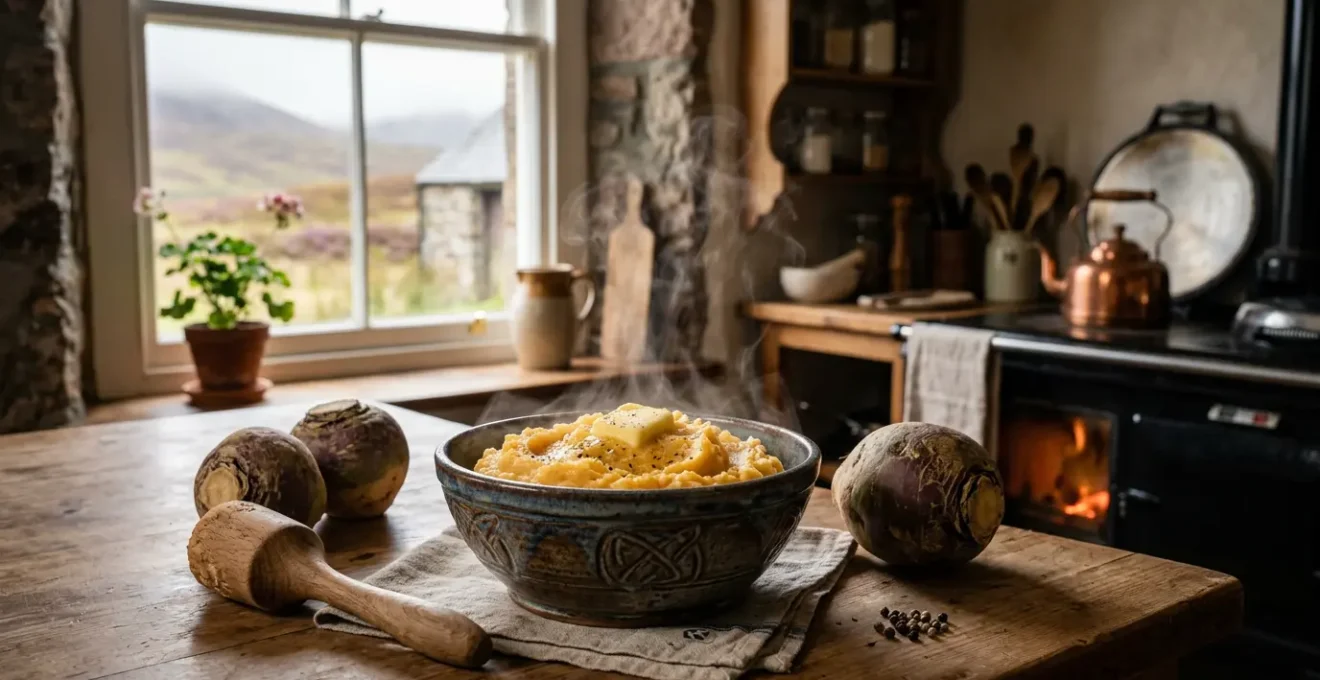
This is what you’re aiming for. A glorious, golden mash, with pools of melted butter just starting to disappear into its creamy depths. This is comfort in a bowl.
And then there’s the pepper. You need a good, coarse grind of black pepper. Lots of it. It cuts through the richness of the butter and the sweetness of the neep. Don’t just sprinkle; give the pepper mill a good, hearty twist. The final dish should have a lovely, speckled appearance. The combination of sweet neep, earthy tattie, rich butter, and fiery pepper is what makes the soul of the mash. Taste it, and add more of what you think it needs. This is about feeling, not just following a recipe.
Carrot or Nutmeg: What Secret Ingredients Elevate Simple Mash?
Once you’ve mastered the basics of a good, honest mash, you can start thinking about the little touches that take it from great to grand. These aren’t about fancy, modern twists; they’re about traditional additions that enhance the natural flavours. You’ll often find neeps and tatties mashed with a carrot or two, a combination known as Clapshot, especially popular in Orkney. The carrot adds another layer of sweetness and gives the mash an even more vibrant, sunny colour.
But the real secret, the one that many Scots will quietly add without ever writing it in a recipe, is a wee grating of nutmeg. It might sound unusual, but it works wonders. The warm, aromatic spice complements the earthy sweetness of the neep in a way that is hard to describe. It just makes it taste more… itself. As the experts at Caroline’s Cooking note in their guide to traditional Scottish food:
A tiny grating of fresh nutmeg in the neeps is not just a suggestion; it’s a revelation. It enhances the natural sweetness of the rutabaga and adds a subtle, warming spice.
– Caroline’s Cooking, Traditional Scottish Cooking Guide
The key is to use freshly grated nutmeg, not the pre-ground powder that’s been sitting in your cupboard for years. A tiny amount is all you need—just a few rasps from a microplane or fine grater into the mash along with the butter. Other warming spices like mace can work as well, but nutmeg is the classic choice. It’s a simple, inexpensive way to add a layer of complexity that will have people asking, “What is your secret?” Just smile and tell them it’s an old family recipe.
Can You Freeze Leftover Neeps and Tatties Without Losing Texture?
It’s a rare day you’ll have leftover neeps and tatties, but if you do, the question of what to do with them arises. Now, let’s be honest with each other: freezing mash is a tricky business. While it’s perfectly safe to do so, the high water content in the vegetables means it can lose a lot of its flavour and texture when it defrosts. It can become a bit watery and sad, which is exactly what we’ve been trying to avoid. Your best bet is to keep leftovers in the fridge, where they’ll be perfectly good for two or three days. Just reheat them gently in a pan or in the microwave with another wee knob of butter for good measure.
However, if you’re planning a trip, especially a camping one, freezing can be a practical option. The key is to manage your expectations and use a good technique. One clever trick is to freeze portions flat in ziplock bags. They take up less space and can double as ice packs in your cooler to keep everything else chilled. A true win-win for any camper!
When it comes time to eat, the best way to bring it back to life is to reheat it gently in a pot over your camping stove. The slow heat helps to evaporate the excess moisture that forms during defrosting. Stir it often, and don’t be tempted to blast it with high heat. A little patience will be rewarded with a warm, comforting meal under the stars.
But the best way to use up leftover mash? Turn it into something new! The classic choice is to make tattie scones. Just mix your cold mash with a bit of flour and a touch of baking powder until you have a soft dough, roll it out thin, cut it into triangles, and cook them on a hot, dry pan until they’re golden brown. Served hot with butter, they’re one of Scotland’s greatest gifts to the world.
Beyond Haggis: What Else Goes Perfectly with Neeps and Tatties?
Haggis is the neep’s most famous companion, and for good reason. The peppery, savoury haggis, the sweet neeps, and the fluffy tatties are a holy trinity of Scottish cuisine. But don’t get tunnel-visioned! Neeps and tatties are wonderfully versatile and go beautifully with all sorts of hearty, flavourful dishes. Think of it as a slightly sweeter, more interesting alternative to plain mashed potatoes. It’s a substantial side dish that can stand up to strong flavours.
It’s the perfect accompaniment for any rich, roasted, or grilled meats. Here are a few ideas to get you started, perfect for a Sunday dinner or even a campfire feast:
- Chicken Balmoral: A chicken breast stuffed with haggis and wrapped in bacon. It’s a classic pairing for a reason.
- Local Sausages: A plate of good quality, locally made pork or venison sausages, grilled and served on a pile of mash, is simple perfection.
- Venison or Lamb: Pan-seared venison steaks or hearty lamb chops are a wonderful match for the sweet earthiness of the neeps.
- Steak Pie: Use it to mop up the rich gravy from a classic Scottish steak pie.
This isn’t just about flavour; it’s proper, hearty food designed to keep you warm and full. A traditional serving of haggis, neeps and tatties provides around 633kcal with plenty of carbohydrates and protein. This is fuel for walking the hills, not dainty wee portions. So whatever you serve it with, make sure the portions are generous. There’s nothing more comforting than a plate piled high with rich meat and a glorious mountain of neeps and tatties.
Boil, Bake or Fry: Which Method Keeps Haggis Moist?
Now that your neeps and tatties are sorted, let’s talk about the haggis. A dry, crumbly haggis is almost as disappointing as watery neeps. The goal is a haggis that is moist, rich, and flavourful. The traditional method is to boil it in its casing, but this comes with the dreaded risk of it bursting and losing all its goodness to the water. It’s the most authentic method, but it can be nerve-wracking.
A safer bet is to bake it. Wrap the haggis tightly in foil—perhaps with a wee splash of whisky and a knob of butter for extra moisture and flavour—and bake it in the oven. This method gives you a lovely ‘roast’ feel but you have to be careful not to overdo it, or it can still dry out. For a 1kg haggis, about an hour at 180°C (350°F) should do the trick. A microwave is the quickest option, but it can sometimes result in an uneven texture.
For those using tinned haggis, which is very handy for travelling or camping, the best method is to use a skillet. Simply remove the haggis from the tin, crumble it into a non-stick pan, and heat it gently over a low heat. You can add a tiny splash of water or stock and cover the pan to create a skillet-steam effect, which keeps it wonderfully moist as it heats through. This is a foolproof way to get a perfect result without any fuss. It’s a method that works just as well on a camping stove as it does in a home kitchen.
Your Quick Guide: Cooking Haggis to Perfection
- Boiling (Traditional): Simmer gently, don’t boil rapidly, for about 45 minutes per 500g. Prick the casing once to prevent bursting.
- Baking (Safe Bet): Wrap in foil with a splash of whisky and butter. Bake at 180°C for about 1 hour for a 1kg haggis.
- Microwaving (Quickest): Remove outer casing, place in a dish, cover, and heat for a few minutes until piping hot.
- Pan-Frying (For loose/tinned haggis): Crumble into a pan, add a little oil or butter, and heat gently, stirring occasionally.
- Campfire Method: Double-wrap in foil with butter and place in the hot embers (not direct flame) for 20-30 minutes, turning halfway.
Potato Starch or Flour: How to Thicken Skink Without Gloopiness?
While we’re on the subject of Scottish comfort food, let’s talk about another classic: Cullen Skink. It’s a beautiful, creamy smoked haddock soup, but like our neeps, it can suffer from a texture problem. A common mistake is to try and thicken it with flour or cornstarch, which can often lead to a gloopy, unnatural consistency. So, how do you get that lovely, silky thickness without ruining the soup?
The secret is already in the pot: the potatoes. Instead of adding an outside agent, you should use the natural starches of the potatoes themselves. This is the authentic, traditional way to do it. As one guide to authentic Scottish cooking advises:
Simply mash some of the cooked potatoes from the soup against the side of the pot to release their natural starches.
– Traditional Scottish Cooking Methods, Authentic Cullen Skink Preparation Guide
This simple trick thickens the soup beautifully and maintains a pure, clean flavour. If your soup needs a bit more body, another wonderful, camp-friendly trick is to crumble in a Scottish oatcake or two. The oats break down and add both thickness and a lovely nutty flavour that complements the smoked fish perfectly. It’s a much better option than reaching for flour. Below is a wee table of options if you find yourself in a pinch.
| Thickener | Method | Result | Camp-Friendly |
|---|---|---|---|
| Natural Potato Starch | Mash cooked potatoes in pot | Most authentic, silky finish | Excellent – no extra ingredients |
| Potato Starch Slurry | Mix with cold water first | Professional, refined texture | Good if pre-packed |
| Scottish Oatcake | Crumble into soup | Adds body and traditional flavor | Perfect – shelf stable |
| Bread (crusts removed) | Tear and stir in | Quick thickening | Emergency option |
This table, based on an analysis of traditional thickening methods, shows that the best solutions are often the simplest and require no special ingredients.
Key Takeaways
- The “neep” in Scotland is a swede (the large, yellow-fleshed vegetable), not a small white turnip.
- Don’t be shy with butter and coarse black pepper; they are essential for flavour and a creamy texture.
- A tiny grating of fresh nutmeg is the secret ingredient that elevates the mash’s natural sweetness.
- For authentic flavour, avoid tourist traps and seek out local butchers, bakeries, and farmers’ markets.
Where to Find Authentic Scottish Cuisine That Isn’t a Tourist Trap?
There’s nothing more disappointing than travelling all the way to Scotland only to eat a pale imitation of its wonderful food. The High Street in any tourist town is full of places selling “authentic” Scottish food that is anything but. So, how do you find the real deal? You need to think like a local. You need to get off the main drag and look for the places that aren’t shouting the loudest.
The best food often comes from the most unassuming places. Your first stop should always be a local butcher for haggis and sausages. They make their own, to their own recipes, and the quality is a world away from the mass-produced versions in the supermarket. The same goes for scones and baked goods—find a proper town bakery, not a fancy hotel tea room. For your neeps and tatties, a farmers’ market will give you the freshest, most flavourful vegetables, straight from the ground.
When looking for a pub or restaurant, look for the signs of a place that cares. A short, seasonal menu is a very good sign. It means the chef is cooking with what’s fresh and local, not just pulling things from a freezer. Don’t be afraid to ask questions. Ask where the smoked haddock for the Cullen Skink is from. If they can tell you it’s from a smokehouse in Aberdeenshire, you’re probably in the right place. Trust your instincts and look for the places filled with locals, not just other tourists.
Granny’s Checklist for Finding Real Scottish Fayre
- Visit the Source: Go to a local butcher for haggis, a town bakery for scones, and a farmers’ market for vegetables.
- Analyse the Menu: Look for a concise, seasonal menu. A huge menu often means a big freezer.
- Get Off the Beaten Path: The best pubs are often a few streets away from the main tourist thoroughfares.
- Listen for the Lilt: If the pub is full of local Scottish accents, it’s a very good sign.
- Ask About Provenance: A good establishment will be proud to tell you where their ingredients come from.
Now, go on. Armed with a bit of Granny’s common sense, you’re ready to make a plate of haggis, neeps, and tatties that will warm your heart and soul. Get into that kitchen and make me proud.