In summary:
- Swap crowded hotspots for a deeper, more intentional heritage experience by travelling during the quieter months.
- Master the logistics of your trip by choosing the right heritage pass and understanding the timing for iconic sites.
- Explore with a sense of custodianship, learning how to access remote ruins responsibly and appreciate the history woven into the landscape.
- Connect with authentic Scottish history by following narrative itineraries, from Viking sagas to your own ancestral roots.
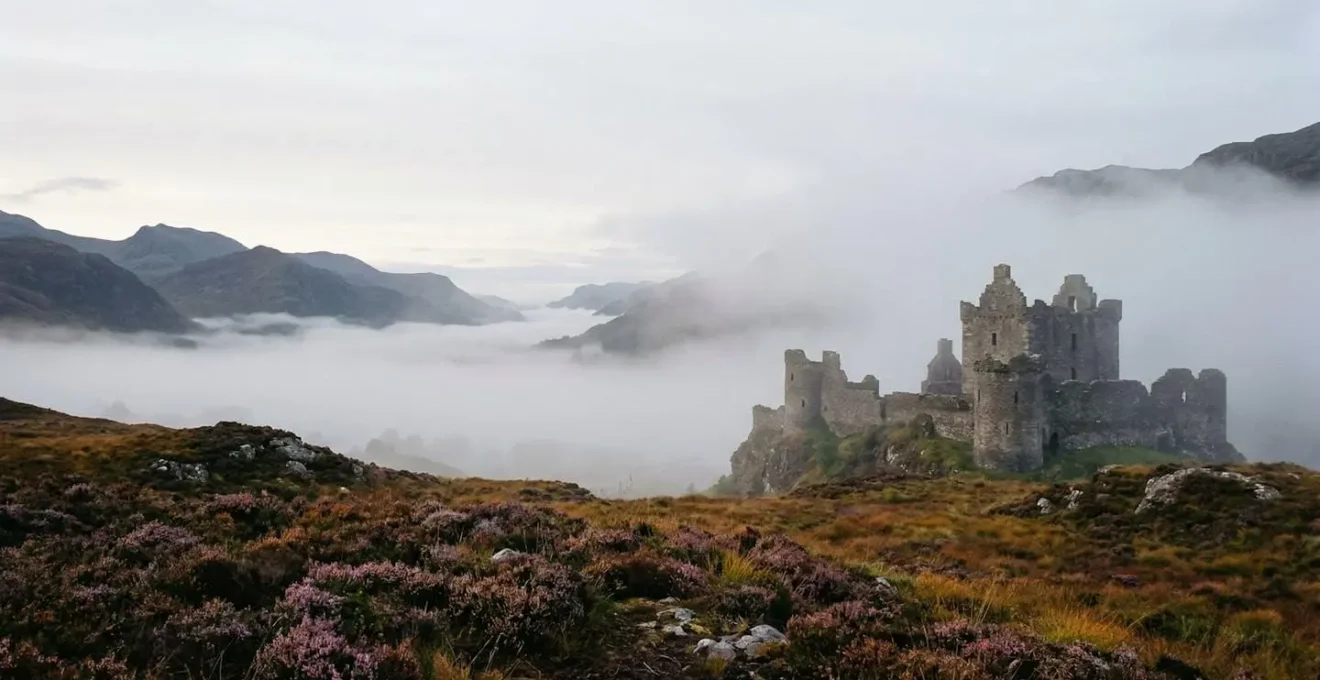
Imagine the Royal Mile in August: a river of people, the air thick with the sound of a hundred different languages, the castle a distant, besieged fortress. For the seasoned traveller, the history enthusiast who has already ticked off the main attractions, this scene can feel more like a theme park than a genuine connection to Scotland’s past. The true soul of Scottish heritage often lies elsewhere, in the quiet corners of the country, waiting to be discovered when the crowds have thinned and the air turns crisp.
Many guides will offer lists of “hidden gems,” but this approach often misses the point. The real value of an off-peak heritage trip isn’t just about avoiding queues; it’s about a fundamental shift in perspective. It’s about moving from a passive tourist to an active participant in preservation. It’s about engaging with the landscape as an archive, where every stone, tide, and trail tells a story. This journey requires more than a map; it demands intentional planning, logistical mastery, and a sense of custodianship for the fragile history you seek.
But what if the key to this deeper experience wasn’t just *where* you go, but *how* you approach the journey itself? This guide is built on that very principle. We will move beyond simple lists of places to explore the practical strategies that transform a simple holiday into a meaningful heritage pilgrimage. We’ll delve into responsible access, compare historical narratives for your itinerary, decode the value of heritage passes, and even show you how to begin tracing your own Scottish ancestry. This is your blueprint for an authentic encounter with Scotland’s history.
This article provides a comprehensive framework for planning your trip. From the practicalities of accessing remote sites to the financial sense of heritage memberships, each section is designed to empower you to create a more profound and personal journey through Scotland’s past.
Summary: A Deeper Dive into Scotland’s Heritage
- How to Access Remote Scottish Ruins Without Damaging the Landscape?
- Viking vs Jacobite History: Which Itinerary Suits Your Family Best?
- Historic Scotland or National Trust: Which Membership Saves More Money?
- The Timing Mistake That Ruins Visits to Eilean Donan Castle
- Where to Find the Real Locations Behind Scottish Faerie Folklore?
- Explorer Pass or Heritage Pass: Which Covers More Educational Sites?
- Grade A Listed: Why Can’t Owners Change the Windows?
- How to Trace Your Ancestors During a 7-Day Heritage Tour in Scotland?
How to Access Remote Scottish Ruins Without Damaging the Landscape?
The allure of a remote, windswept ruin is powerful, but with that privilege comes a profound responsibility. As a visitor, you become a temporary custodian of that history. The first rule of exploring these fragile environments is to practice active stewardship. This means understanding that the landscape itself is the primary artefact. Your goal is to leave it not just as you found it, but with its integrity fully intact for the next generation of explorers. This philosophy is at the heart of how organisations like Historic Environment Scotland protect over 300 historic sites across the country.
Adhering to the “Leave No Trace” principle is non-negotiable, especially at archaeological sites which are highly susceptible to erosion and contamination. The oils from a single human hand can accelerate the weathering of ancient carved stones. To ensure you’re part of the solution, not the problem, follow these essential guidelines:
- Stay on designated paths. If there isn’t a clear path, you are likely in a restricted area where the ground itself is part of the archaeological record.
- Never touch ancient stones with bare hands. Skin oils can cause irreversible damage over time.
- Park responsibly. Campervans and vehicles should be parked at least 100 meters from monument boundaries to respect the site’s curtilage and prevent ground compaction.
- Plan for offline navigation. Download OS Maps or a similar service to identify property boundaries and access rights before you lose signal.
- Dispose of all waste properly. Grey water from vans must only be emptied at designated disposal points, never near a heritage site.
Case Study: The Antonine Wall’s Conservation Approach
A prime example of a landscape-as-archive is the Antonine Wall. As a UNESCO World Heritage Site, its preservation is a delicate balance. The National Trust for Scotland, in guardianship with Historic Environment Scotland, manages sections like Rough Castle Fort. The focus here is not on reconstruction but on conservation. The visible turf ramparts are the authentic, 2,000-year-old structure. Access is carefully managed through designated paths to prevent erosion of the very feature visitors come to see, a principle that demonstrates how responsible access is fundamental to preservation, as detailed in the Trust’s approach to World Heritage Sites.
Viking vs Jacobite History: Which Itinerary Suits Your Family Best?
Planning an intentional heritage trip means moving beyond a simple checklist of sites. Instead, consider crafting your journey around a narrative itinerary. By choosing a specific thread of Scottish history, you create a more cohesive and memorable experience, especially for a family with varied interests. Two of the most compelling narratives are the sagas of the Vikings and the romantic tragedy of the Jacobites. Each offers a completely different flavour of adventure, landscape, and historical insight.
The Viking Trail plunges you into the ancient world of Norse settlers, a story of seafaring, trade, and archaeology primarily found in the Northern and Western Isles. It’s a hands-on journey through time, ideal for those fascinated by deep history. In contrast, the Jacobite Trail follows the dramatic 18th-century tale of rebellion, loyalty, and loss, immortalised in popular culture like Outlander. This path is one of evocative battlefields and grand castles, centred more in the Highlands and Central Belt. Deciding which story to follow is the first step in building a truly immersive tour.
To help you choose the narrative that best fits your family’s interests, this comparison breaks down the key aspects of each trail. As official tourism bodies suggest, aligning your trip with a theme can greatly enhance the experience.
| Aspect | Viking Trail | Jacobite Trail |
|---|---|---|
| Best For | Families interested in ancient history and archaeology | Fans of Outlander and Scottish romanticism |
| Key Sites | Jarlshof (Shetland), Orkney Islands, Western Isles | Culloden, Falkirk, Highland castles |
| Duration | 7-10 days minimum | 5-7 days |
| Child-Friendly Rating | High – interactive archaeological sites | Moderate – more battlefield focus |
To make either journey come alive, focus on interactive experiences. For a Viking-themed trip, visiting the reconstructed longhouse at Jarlshof or handling replica artefacts at the Shetland Museum provides a tangible connection to the past. For a Jacobite tour, the immersive exhibition at Culloden Battlefield and the living history at the Highland Folk Museum offer powerful insights into 18th-century life.
Historic Scotland or National Trust: Which Membership Saves More Money?
Once you have a theme, the next step in your logistical mastery is deciding on a heritage pass. For a multi-day trip, the cost of individual entry tickets can quickly add up. The two main players in Scotland are Historic Environment Scotland (HES) and the National Trust for Scotland (NTS). While both offer excellent value, they manage different types of properties, and the right choice depends entirely on your planned itinerary. It’s a common mistake to buy a pass without first mapping out your must-see sites.
An HES membership or Explorer Pass is generally unbeatable for those following an archaeological or military history trail. It grants access to iconic state-run properties like Edinburgh Castle, Stirling Castle, and the prehistoric wonders of Orkney like Skara Brae. A detailed analysis shows that for an “Archaeology Fan” visiting five sites in Orkney, a 7-day Explorer Pass could save £23 over individual tickets. However, for a short “Castle Hopper” trip focused on just the big three castles in the Central Belt, the pass may not pay for itself.
Conversely, an NTS membership is often the better choice for travellers interested in social history, grand country homes, and significant natural landscapes. It covers properties like the Culloden Battlefield visitor centre, Gladstone’s Land in Edinburgh, and beautiful gardens across the country. The value of an NTS pass often lies less in pure ticket savings and more in supporting a charity dedicated to preserving Scotland’s “heritage in its widest sense.” Furthermore, memberships often come with reciprocal benefits. As Historic Environment Scotland notes about their own membership, there are added perks for UK travellers:
Half price entry to over 500 heritage attractions in England (English Heritage*) and Wales (Cadw*) in your first year
– Historic Environment Scotland, Official Membership Benefits
The smartest financial decision is to first draft your ideal 7-day itinerary, then calculate the total entry cost versus the price of each pass. More often than not, one will present a clear financial advantage tailored to your specific journey.
The Timing Mistake That Ruins Visits to Eilean Donan Castle
Even with the right pass and a perfect itinerary, a heritage visit can be diminished by one simple error: poor timing. Nowhere is this more apparent than at Eilean Donan Castle. It is arguably the most photographed castle in Scotland, and most visitors arrive midday, jostling for the same classic shot before being herded through on a tour. This experience is the antithesis of the intentional, reflective journey you’re seeking. The secret to truly connecting with this iconic place lies in understanding its relationship with light and tide.
Visiting in the off-peak season is the first step. With off-peak seasons see up to 70% fewer visitors at major sites, you already have a significant advantage. But to elevate your experience from good to sublime, you must think like a photographer and a local. The most magical moments at Eilean Donan happen when the tour buses are long gone. The “blue hour,” that brief window of twilight after sunset, bathes the castle in an ethereal glow, creating a moment of quiet contemplation that is impossible to find at 2 PM.
Furthermore, the tide is a critical, and often overlooked, element. High tide creates the mirror-like reflections that make Eilean Donan famous, turning a beautiful scene into a breathtaking one. Conversely, low tide reveals the raw, rugged foundations of the bridge, offering a unique and gritty perspective rarely captured by the average tourist. By mastering these variables, you transform a fleeting photo stop into a memorable encounter.
Your Action Plan: Perfect Timing at Eilean Donan Castle
- Check tide tables before visiting. Aim for high tide to capture the iconic reflection of the castle in the water.
- Visit during the ‘blue hour’. The 30 minutes just after sunset provide dramatic, moody lighting with virtually no crowds.
- Embrace “bad” weather. Fog, mist, or a light rain can create intensely atmospheric and unique photographs that stand out.
- Explore at low tide. This reveals the bridge’s foundations, offering unique angles and a less-seen view of the castle’s connection to the loch bed.
- Arrive before the buses. Be there before 9 AM, two hours ahead of the main tour bus arrivals, for a chance at solitary exploration of the exterior.
Where to Find the Real Locations Behind Scottish Faerie Folklore?
Scotland’s heritage is not confined to stone and mortar; it’s also woven into the fabric of its folklore. The tales of the Sìth (the faeries) are a vital part of the cultural landscape, and visiting the real locations associated with these stories offers a unique and mystical connection to the past. While some spots, like the Fairy Pools on Skye, have become overwhelmed with visitors, many more authentic and quieter sites remain for the respectful explorer.
These are not tourist attractions in the traditional sense. They are places of quiet power, often unmarked and requiring a little effort to find. Visiting them is an exercise in imagination and respect. This is where the landscape truly becomes an archive of belief. For instance, the Fairy Glen on Skye, with its strange, conical hills and twisted trees, feels like a landscape straight out of a storybook, yet it remains far quieter than its more famous counterpart. Similarly, Doone Hill in Aberfoyle is known as a ‘fairy knowe,’ a hollow hill believed to be a gateway to the otherworld, a place steeped in local legend but off the main tourist trail.
Connecting with these stories requires a light touch. The tradition of leaving offerings is ancient, but it must be done with modern ecological awareness. Leaving non-biodegradable items or building modern stone cairns can damage these fragile sites. Instead, a simple wildflower or a moment of quiet reflection is a more authentic tribute. As travel writer Yvette from Wayfaring Kiwi explains regarding one such site:
The Cheese Well is a natural spring found on Minch Moor, near the village of Traquair. It is called The Cheese Well due to the custom of travellers leaving small pieces of cheese as an offering to the ‘faeries’ who guarded the spring. It is said that the faeries would grant you a safe passage if you left them a little present!
– Wayfaring Kiwi, Secret Places in Scotland Off The Beaten Path
For those willing to seek them out, here are a few coordinates to begin your folkloric journey:
- Fairy Glen, Isle of Skye: 57.5804° N, 6.3316° W. A surreal and much quieter alternative to the Fairy Pools.
- Dunvegan Castle, Isle of Skye: 57.4485° N, 6.5896° W. View the legendary Fairy Flag, an ancient banner said to have protective powers.
- Doone Hill, Aberfoyle: 56.1686° N, 4.3832° W. A classic, less-touristed ‘fairy knowe’ at the heart of many local legends.
- Thomas the Rhymer’s Tree, Eildon Hills: 55.5992° N, 2.7156° W. The spot where the famous bard was said to have met the Queen of Elfland.
Explorer Pass or Heritage Pass: Which Covers More Educational Sites?
For the history enthusiast, a heritage pass is more than a money-saving tool; it’s a key to unlocking educational opportunities. When choosing between a Historic Scotland Explorer Pass and a National Trust for Scotland membership, it’s crucial to look beyond the headline attractions and consider which portfolio aligns with your specific educational interests. The two organisations have distinct focuses, and understanding this difference is vital for a truly enriching trip.
The Historic Scotland Explorer Pass is the clear winner for anyone focused on archaeology and military history. HES acts as the custodian for the nation’s most significant state-owned properties. This includes not only the great castles like Edinburgh and Stirling but also an unparalleled collection of prehistoric sites, such as Skara Brae in Orkney and the various forts along the Antonine Wall. Their membership also often includes access to digital archives and scholarly resources, making it ideal for the dedicated researcher.
The National Trust for Scotland, on the other hand, excels in the realm of social and cultural history. Their properties often tell the story of how people lived, from the opulent interiors of The Georgian House in Edinburgh to the preserved 17th-century tenement of Gladstone’s Land. Their jewel, Culloden Battlefield, offers one of the most powerful military history experiences in the country, but their broader portfolio is rich with country estates, gardens, and sites of natural beauty that tell a different kind of Scottish story. Their educational events frequently include living history demonstrations, offering a more hands-on, immersive experience.
This table, based on information from sources like the official Explorer Pass guide, breaks down the educational strengths of each pass to help you make an informed decision.
| Educational Focus | Historic Scotland Explorer Pass | National Trust Membership |
|---|---|---|
| Archaeological Sites | Skara Brae, Antonine Wall, prehistoric sites | Limited archaeological focus |
| Military History | Edinburgh, Stirling, Fort George | Culloden Battlefield |
| Social History | Limited social history sites | Gladstone’s Land, Georgian House |
| Educational Events | Regular archaeological talks | Living history demonstrations |
| Archive Access | Digital resources for members | Members-only publications and lectures |
Grade A Listed: Why Can’t Owners Change the Windows?
When you stay in a historic property or visit a preserved building in Scotland, you might notice original, sometimes imperfect, single-pane sash windows. A common question is why owners of these Category A listed buildings—the most significant historic structures—can’t simply replace them with modern, energy-efficient double glazing. The answer lies at the very heart of architectural preservation and the concept of a building’s historic integrity.
A Category A listing signifies that a building is of national or international importance. The goal of listing is to protect not just the building’s overall appearance, but its historic fabric. Original windows are a critical component of this fabric. They represent the technology, craftsmanship, and aesthetic of the period in which they were made. Features like hand-blown glass with its subtle imperfections, or the specific mechanics of a traditional sash and case window, are considered irreplaceable elements of the building’s story. Replacing them would be akin to tearing a chapter out of a priceless book.
The Preservationist’s Compromise: A Grade A Case Study
For owners of Category A listed buildings, the preservation requirement is a legal obligation. Any alteration requires Listed Building Consent, and replacing original features is almost always refused. The accepted compromise for improving energy efficiency is often the installation of discreet secondary glazing on the interior. This solution preserves the irreplaceable original windows and their mechanisms while providing some thermal benefit. This approach ensures that guests and visitors can experience the authentic historical architecture, seeing the world through the same glass and in the same light as those who lived there centuries ago.
This commitment to authenticity comes at a cost, both financial and practical. However, it is balanced by a sense of duty. As one heritage property owner noted in guidelines published by Historic Environment Scotland, the role is one of temporary guardianship:
The immense cost and difficulty of finding artisans to repair traditional windows is balanced by the immense pride in being the temporary custodian of a piece of national history
– Scottish Heritage Property Owner, Historic Environment Scotland Guidelines
Key Takeaways
- Intentional off-peak travel is not just about avoiding crowds; it is about achieving a deeper, more reflective connection with Scotland’s history.
- Effective logistical planning, from choosing the right heritage pass to mastering the timing of your visits, is the key to transforming a good trip into an exceptional one.
- Approaching remote and historic sites with a mindset of custodianship and respect is essential for preserving the very heritage you have come to experience.
How to Trace Your Ancestors During a 7-Day Heritage Tour in Scotland?
For many, the most profound connection to Scottish heritage is a personal one. Tracing your ancestral roots can transform a holiday into a pilgrimage, adding a powerful layer of meaning to every landscape and village you visit. With a history documented for over 5000+ years, Scotland offers a rich tapestry for genealogical research, but a successful trip requires careful planning before you even leave home.
The journey begins not in the Highlands, but online. The first crucial step is to spend time on ScotlandsPeople.gov.uk, the official government source for genealogical data. Here, you can search for birth, marriage, and death certificates, census records, and parish registers. The goal is to identify key names, dates, and, most importantly, the specific parishes where your ancestors lived. Armed with this information, your tour shifts from a general sightseeing trip to a targeted investigation.
A well-structured 7-day tour can effectively blend archival research with on-the-ground exploration. Start in Edinburgh to access the National Records of Scotland, where you can view original documents you may have found online. From there, travel to your ancestral parish. Walk the old coffin roads, visit the local church, and spend time in the kirkyard (graveyard). These tangible experiences provide a connection that no online record can match. Visiting the local museum or heritage centre can also uncover local family histories and photographs that bring your family’s story to life. A poignant final step can be visiting the port from which your ancestors emigrated, standing by the water at high tide to imagine the conditions of their departure.
Here is a template for a productive 7-day ancestral research itinerary:
- Day 1-2: Edinburgh. Dedicate this time to foundational research at the National Records of Scotland and the Central Library’s Scottish collection.
- Day 3: Digital Deep Dive. Use your findings to refine searches on ScotlandsPeople.gov.uk, identifying specific parishes, farms, or streets.
- Day 4-5: Parish Immersion. Travel to your ancestral parish. Walk the old roads, visit the local church, and explore the landscape your family knew.
- Day 6: Local Discovery. Explore the local museum and spend time carefully examining headstones in the local graveyards.
- Day 7: The Final Step. If applicable, visit the port of emigration, a powerful way to close the circle on their journey and your own.