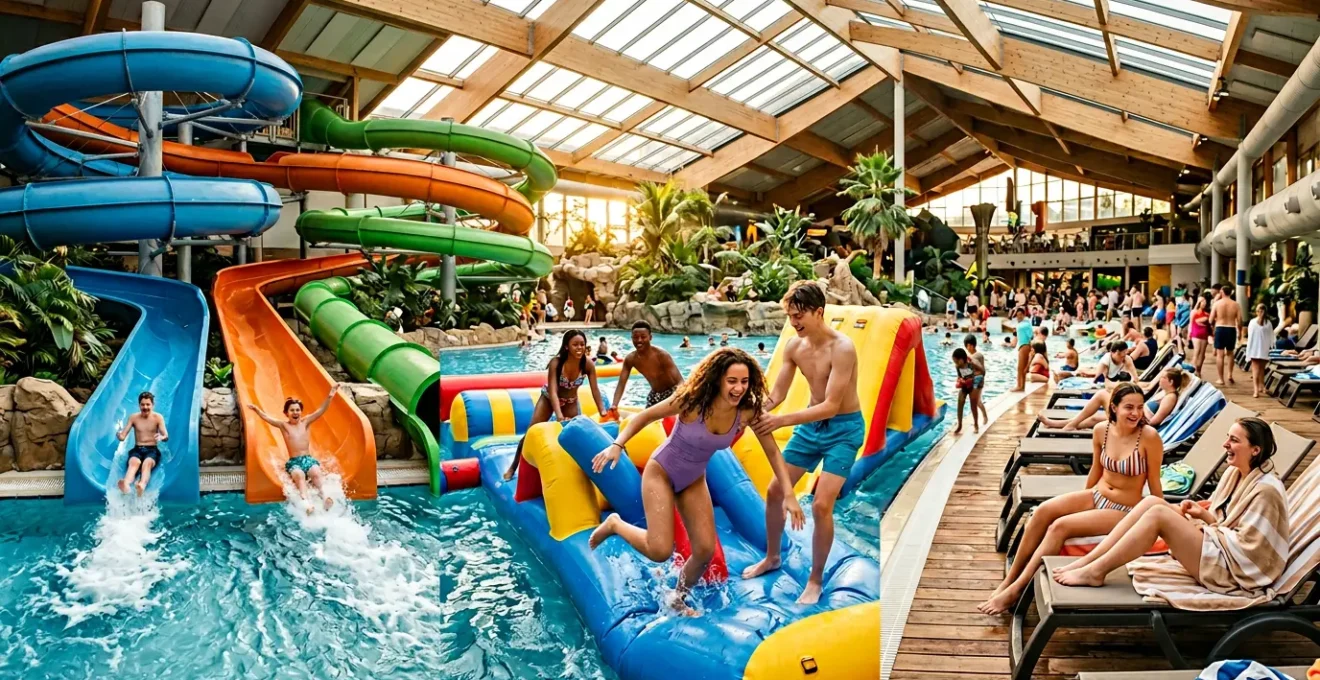
The secret to a successful family holiday with a teenager isn’t a longer list of activities; it’s a park designed for their independence.
- Most parks fail teens not on options, but on the logistical freedom to use them.
- Focus on a park’s “autonomy infrastructure”: its layout, rules, and payment systems that allow teens to socialise safely without parental micromanagement.
Recommendation: Before booking, analyse the park map, check unsupervised access rules, and assess the real cost of activity passes to gauge its true teen-friendliness.
The scene is familiar to any parent of a teenager: you’ve driven for hours, unpacked the car, and are met with the classic, soul-crushing eye-roll. The holiday park, which looked so vibrant in the brochure, is dismissed with a sigh. “There’s nothing to do here.” For a parent of a 14-year-old, this is a particular point of tension, as their needs are caught between the kids’ club and total freedom. You’ve likely spent hours comparing parks based on their lists of amenities—pools, arcades, sports courts—believing more options equal less boredom.
The standard advice revolves around finding parks with good Wi-Fi, a decent pool, and maybe some evening entertainment. But this approach often fails because it misses the fundamental driver of teenage happiness: autonomy. They don’t just want things to do; they want the freedom to do them on their own terms, with their peers, and without you acting as their constant planner and bank. This is where the concept of a park’s ‘Teen Autonomy Infrastructure’ becomes the most critical evaluation tool.
But what if the key wasn’t the number of climbing walls, but whether your teen can get to them and book a slot without your help? What if the location of your caravan was more important than its features? This guide moves beyond the brochure. As a teen activity coordinator, I’ll provide the inside track on the logistical details that truly make or break a family holiday. We will dissect the subtle but crucial elements—from pool supervision policies to the real value of an activity pass—that determine whether your park is a teen paradise or a source of family friction.
This article will provide a practical framework for assessing holiday parks through this new lens. By focusing on the underlying infrastructure that enables independence, you can finally choose a destination that meets everyone’s needs and avoids the dreaded holiday boredom.
Summary: A Parent’s Guide to Choosing Holiday Parks That Teens Won’t Hate
- Lifeguards or Not: What to Check Before Booking a Park Pool?
- Entertainment Complex vs Quiet Zone: Where to Request Your Caravan?
- Coin Laundry Availability: Why It Matters for Active Families?
- Do Park Restaurants Cater to Celiacs in Remote Areas?
- The ‘Indoor Playbarn’ Factor: Is It Big Enough for high Capacity?
- Which Holiday Parks Have Indoor Pools for Rainy Scottish Days?
- Horrible Histories: Where to Find Gore and Battles to Interest Kids?
- Is a Holiday Park Pass Worth the Extra Cost for Families?
Lifeguards or Not: What to Check Before Booking a Park Pool?
The swimming pool is often the social hub of a holiday park, especially for teenagers. It’s where they meet, hang out, and get a break from family. For a parent, however, it can be a source of anxiety. You want them to have freedom, but safety is paramount. The first logistical hurdle to investigate is the park’s policy on unsupervised swimming. Many parents assume strong swimming skills mitigate risk, but research from the American Academy of Pediatrics shows that drowning risk increases again during teen years, often due to overconfidence or peer pressure.
This is why the presence of lifeguards is non-negotiable for enabling teen autonomy. A supervised pool means you can genuinely relax elsewhere in the park, knowing there are professional eyes on the water. Before you book, call the park and ask specific questions. Are lifeguards present during all opening hours, or only at peak times? What is the minimum age for unsupervised swimming? It typically ranges from 14 to 16, a critical detail for parents of young teens.
Furthermore, some parks now use booking systems for pool sessions to manage capacity. While this helps avoid overcrowding, it can be a friction point if it requires a parent to book slots constantly. An ideal ‘Teen Autonomy Infrastructure’ allows teens to manage their own bookings via an app. The bottom line is that a well-managed, supervised pool is one of the first and most important green flags for a stress-free holiday.
By clarifying these policies upfront, you’re not just ensuring safety; you’re building the foundation for your teen’s independence and your own peace of mind.
Entertainment Complex vs Quiet Zone: Where to Request Your Caravan?
When booking, the park’s website often presents caravan location as a simple choice between a quiet spot or one near the action. For a family with a teenager, this decision is far more strategic and directly impacts their holiday freedom. This is where understanding the park’s ‘social geography’ comes into play. It’s not just about noise; it’s about proximity to the unofficial social hubs where teens naturally congregate.
Requesting a caravan near the entertainment complex might seem logical, but it often means being surrounded by the noise and traffic of families with young children. A better strategy is to request a location that is a short, safe walk away from both the main complex and key teen-friendly facilities like the sports courts, skate park, or a specific teen-only zone. This gives them easy, independent access to their social life without you having to be their chauffeur. It also provides a buffer, reducing noise and giving the family a quiet retreat.
The park map is your most valuable tool here. Look for pathways and lighting between zones. Does the route from your potential caravan to the basketball court involve crossing a busy park road?
As this layout shows, the ideal spot is often on the edge of a zone, balancing access with privacy. It allows your teen to feel a sense of ownership over their part of the holiday, fostering independence while keeping them within a safe and manageable distance. This single choice can dramatically reduce the “I’m bored, take me to…” requests, increasing your “off-duty” time.
Ultimately, the right location acts as a launchpad for your teen’s autonomy, turning the park itself into an explorable, engaging environment rather than just a home base.
Coin Laundry Availability: Why It Matters for Active Families?
It sounds mundane, but for an active family with a teenager, the on-site launderette is a critical piece of the holiday infrastructure. Teens involved in sports, swimming, or outdoor adventures can go through multiple outfits a day. Without accessible laundry facilities, you’re faced with two bad options: overpack a car full of clothes, or deal with piles of damp, muddy gear for a week. This seemingly small logistical detail can become a major friction point.
A well-equipped launderette supports a ‘pack light’ strategy. You can bring just 3-4 outfits per teen and plan to do a wash every couple of days. This not only saves space in the car but also reduces stress. Before you go, check what system the park uses. The old-school hunt for coins is a hassle you don’t need; many modern parks have moved to card or app-based payment systems, which are far more convenient. Also, verify the availability of dryers, as relying on an airer in a damp caravan is a recipe for musty clothes.
This is also a fantastic, low-stakes opportunity to foster responsibility. Teaching a 14-year-old basic laundry skills before the trip and making them responsible for washing their own sports kit or swimwear is a win-win. They gain a life skill and a sense of independence, and you get a chore taken off your plate. Scheduling laundry for off-peak times, like mid-morning or late evening, can also help you avoid queues and get it done quickly, freeing up more time for actual holiday activities.
By planning for laundry, you’re not just planning for clean clothes; you’re engineering a smoother, more independent holiday experience for the whole family.
Do Park Restaurants Cater to Celiacs in Remote Areas?
Food is central to any holiday, but for a family with a celiac teenager, it can be a constant source of stress, especially in remote holiday parks where local supermarket options are limited. The convenience of on-site restaurants and takeaways is a key part of the ‘parent off-duty’ score, but only if they can be trusted to provide safe gluten-free meals. A simple “GF” symbol on the menu is not enough; true celiac safety is about process and preventing cross-contamination.
This is another area where a pre-booking logistical deep dive is essential. When you’re considering a park, particularly one in a rural part of Scotland or Wales, you need to contact the food and beverage manager directly. Don’t just ask if they have gluten-free options; ask about their process. Do they have a separate preparation area or a dedicated gluten-free fryer for chips? Are their staff trained in celiac disease awareness and proper food handling?
Inquiring about ingredient lists for all menu items and their availability at grab-and-go counters is also crucial. A teen wants the same spontaneity as their friends—the ability to grab a quick snack without a 20-minute parental interrogation of the staff. Some proactive parks even allow you to request specific gluten-free products to be ordered into the on-site shop if you give them advance notice. This level of service demonstrates a genuine understanding of dietary needs and is a huge green flag for a park’s commitment to guest welfare.
Getting clear, confident answers to these questions before you book can transform the holiday from a stressful culinary minefield into a genuinely relaxing break for everyone.
The ‘Indoor Playbarn’ Factor: Is It Big Enough for high Capacity?
Many holiday park brochures proudly feature an ‘indoor playbarn’ or ‘games room’, but for a 14-year-old, the standard soft play area filled with toddlers is their worst nightmare. The “playbarn problem” is that most are designed for younger kids, leaving teens with nowhere to go, especially on a rainy day. A successful park recognises that teenagers need their own territory—a space that feels like it belongs to them, not their younger siblings.
When evaluating a park, look beyond the simple existence of an indoor zone and scrutinise what it actually contains. Is it just a couple of tired-looking pool tables in a corner, or is it a dedicated teen lounge? The best spaces offer a mix of activities, comfortable seating for just hanging out, and crucial amenities like charging points and reliable Wi-Fi. They create an environment where teens can socialise without feeling pressured to spend money.
A great example of this philosophy is the ‘HangOut’ concept pioneered by some forward-thinking parks, which transforms the teen space into a social hub.
Case Study: Center Parcs’ HangOut Revolution
Center Parcs revolutionized teen spaces with their HangOut concept – dedicated chill zones featuring Interactive Soccer Walls, DJ Booths, and Academy workshops for graffiti and mixing. These spaces recognize teens need their own territory away from younger children, with charging points, good Wi–Fi, and no requirement to spend money, solving the ‘playbarn problem’ entirely.
This approach proves that a successful indoor space is about social dynamics, not just activities. It’s a sanctuary where teens can be themselves, build holiday friendships, and enjoy their independence, which is the ultimate goal.
Finding a park that invests in a proper teen-centric indoor space is one of the surest ways to guarantee a happy, socially engaged teenager, regardless of the weather.
Which Holiday Parks Have Indoor Pools for Rainy Scottish Days?
Planning a holiday in Scotland means planning for rain. While the stunning landscapes are the main draw, having a robust indoor activity plan is essential for keeping a teenager engaged when the weather turns. An indoor pool is the bare minimum; the best Scottish parks go much further, creating a weatherproof ‘Teen Autonomy Infrastructure’ that ensures the fun doesn’t stop when the rain starts.
A standard heated rectangle of water won’t hold a teen’s attention for long. Look for parks that have invested in their indoor water facilities with features like slides, flumes, or wave machines. These turn a simple swim into a genuine activity. Beyond the pool, the breadth of other indoor options is what truly separates the best parks. For instance, Haven’s Scottish park specifically addresses rainy day challenges with over 10 indoor activities, including high-adrenaline options like an Aerial Adventure course and climbing walls, alongside social activities like a roller disco. These are the kinds of experiences that create lasting memories.
Comparing the specific indoor offerings is crucial, as not all parks are created equal. A quick analysis shows significant differences in the quality and variety of facilities available.
| Park Name | Indoor Pool Features | Other Indoor Activities | Teen-Specific Amenities |
|---|---|---|---|
| Craig Tara (Haven) | Heated pool, water slides, flumes | Aerial Adventure, climbing wall, roller disco | Laser tag, arcade, sports court |
| Greenacres (Haven) | Indoor heated pool, splash features | Games arcade, mini bowling | Adventure golf, pedal karts |
| Primrose Valley | Multi-lane slides, play equipment | Inflatable arena, arcades | Foot golf, kayaking activities |
As this comparison of park facilities highlights, parks like Craig Tara clearly prioritise a diverse indoor offering that caters directly to a teen’s need for both physical challenges and social fun, making them a much safer bet for a Scottish holiday.
By choosing a park with a strong indoor program, you’re not just buying insurance against bad weather; you’re investing in a holiday that remains engaging and fun no matter what the sky looks like.
Horrible Histories: Where to Find Gore and Battles to Interest Kids?
Getting a teenager interested in a “historical day out” can be a tough sell. The key is to move beyond dry museum exhibits and find experiences that tap into what they find exciting: conflict, compelling stories, and maybe a little bit of gore. The ‘Horrible Histories’ approach—focusing on the gruesome, quirky, and dramatic side of the past—is a brilliant way to engage them. Even better is when you can connect this to their existing interests, like film or fantasy.
The smartest holiday parks are those that leverage incredible nearby attractions, positioning themselves as a basecamp for wider adventures. This expands the ‘activity list’ beyond the park’s boundaries and provides unique, memorable experiences that a standard entertainment program can’t match. A prime example is the synergy between certain parks and nearby castles that have a modern pop culture connection.
This strategy allows parents to frame a historical visit as something much more exciting, turning a potentially boring day into a highlight of the trip.
Case Study: Alnwick Castle’s Pop Culture Appeal
Haggerston Castle Holiday Park brilliantly leverages nearby Alnwick Castle, which doubles as Hogwarts in the Harry Potter films. The castle offers ‘dragon quest’ adventures, broomstick training, and historical reenactments that appeal to teens far beyond typical Horrible Histories content. This combination of a major pop culture connection and real medieval history creates perfect Instagram moments while engaging reluctant teen historians.
This shows that the “best activities” aren’t always on-site. Researching what’s in the surrounding area is a critical part of planning. Look for castles with a history of battles, dungeons you can explore, or sites with famous ghost stories. These are the hooks that can capture a teenager’s imagination and turn a history lesson into a thrilling adventure.
By thinking creatively about off-site excursions, you can add a whole new dimension to your family holiday and spark an interest in history that lasts long after you’ve returned home.
Key Takeaways
- A park’s value is in its ‘Teen Autonomy Infrastructure’—the systems that allow for independence.
- The physical location of your caravan is as important as its features for reducing family friction.
- The best teen activities are not always on-site; leverage nearby attractions with pop culture or historical appeal.
Is a Holiday Park Pass Worth the Extra Cost for Families?
The holiday park pass, often called a “Fun Pass” or “Activity Pass,” is presented as the key to unlocking all the park has to offer. For a family with a teenager eager to try everything from go-karts to high ropes, it can seem like a necessary expense. However, its real value is highly dependent on your family’s specific plans and, once again, the park’s logistical setup. Simply buying a pass for everyone doesn’t guarantee value for money; in fact, it can sometimes be a waste.
The main benefit is often financial. For example, Haven’s booking system reveals that pre-booking activities saves up to 20% compared to on-site prices, which is a significant incentive. However, the critical first step is to sit down with your teen and list the activities they *actually* want to do. Many premium activities, like Segways or go-karts, often require an additional payment on top of the pass. You must check the exclusions list carefully to avoid disappointment.
Calculating the break-even point is essential. Add up the individual cost of their desired activities and compare it to the price of the pass. Also, consider the hidden benefits. Passes often grant priority booking, which can be invaluable during peak season when slots for popular activities fill up fast. Some parks even have limitations on free activities, like swimming, which a pass might bypass. It’s a complex equation with many variables to consider.
Your Action Plan: Calculating Teen Pass Break-Even Points
- List Desired Activities: Get your teen to list all the activities they genuinely want to do and find their individual pay-as-you-go prices (e.g., Segways £15, High ropes £18).
- Calculate Total Cost: Add up the individual costs and compare this total to the price of the activity pass (typically £80-£120 for a week).
- Check for Exclusions: Scrutinise the pass details. Are premium activities like Segways or water sports included, or do they cost extra regardless?
- Factor in Access Perks: Does the pass offer priority booking for activities or swimming sessions? This has a non-financial value, especially in peak season.
- Verify Usage Limits: Be aware of any restrictions. For example, some passes may limit you to a certain number of pre-booked sessions, even for ‘included’ activities.
Ultimately, a park pass can be a great tool for enabling teen autonomy and saving money, but only if you do the maths first. By treating it as a strategic investment rather than an automatic purchase, you ensure that you’re paying for experiences your teen will actually use and value, making it a final, crucial step in planning the perfect holiday.