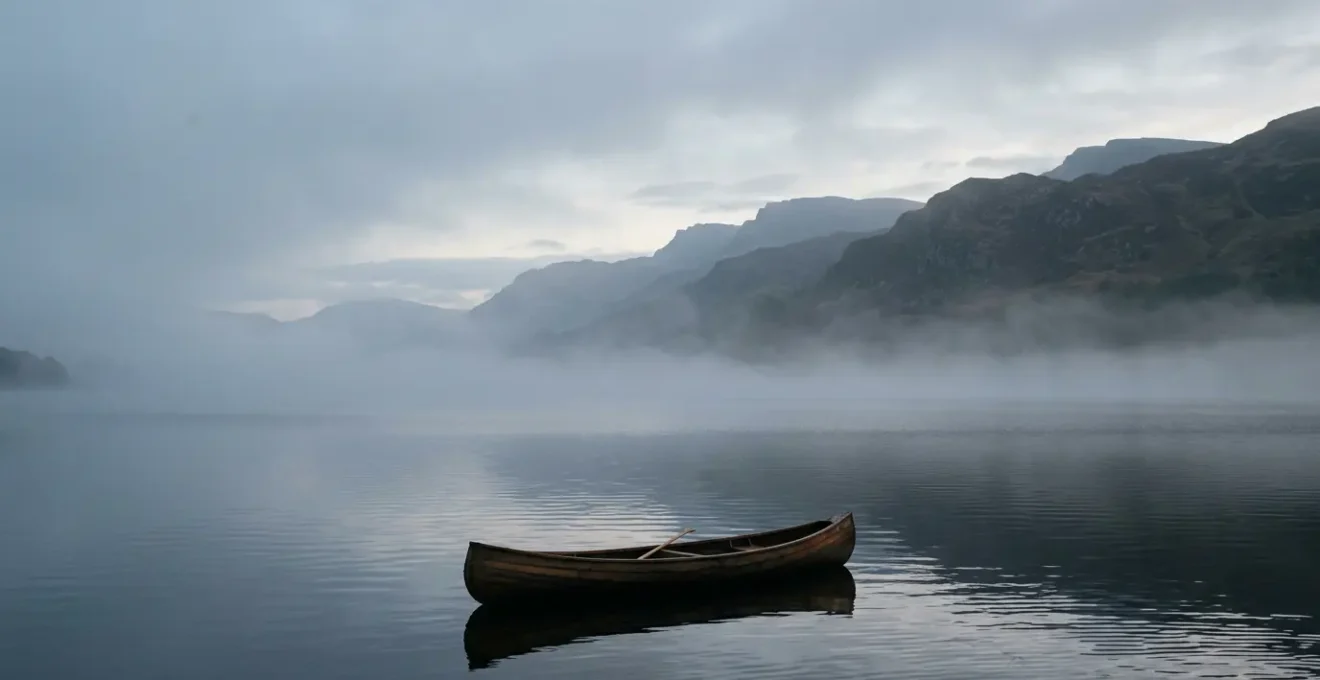
Successfully paddling the Great Glen solo is less about the gear you pack and more about adopting an expedition leader’s mindset of dynamic risk assessment.
- The biggest threat isn’t gear failure; it’s the unpredictable wind on the large lochs, requiring disciplined go/no-go decisions.
- True wild camping success comes from digital scouting and understanding the landscape from a water-level view, not just following the rules.
Recommendation: Shift your planning focus from creating a static checklist to developing a flexible decision-making framework for every challenge on the water.
For an experienced canoeist, the idea of a coast-to-coast journey across Scotland is intoxicating. The Great Glen Canoe Trail, a 60-mile route from Fort William to Inverness, presents itself as the ultimate prize. Most guides will give you a familiar list: pack waterproofs, check the weather, book your campsites. This advice is sound, but it’s not what will keep you safe or make the trip a success when you’re paddling alone. It addresses the ‘what’, but critically misses the ‘how’ and ‘why’ of expedition decision-making.
The standard approach treats the journey like a predictable hike, but from the water, the rules change. The real challenges are not found on a gear list. They are in the subtle shifts of the wind across Loch Ness, the logic of portaging nearly thirty locks, and the art of finding a campsite that is truly wild and inaccessible by land. Relying on a simple checklist is to prepare for a trip that exists only on paper. A successful solo crossing demands more; it requires an expedition mindset.
This guide is built on that principle. We will deconstruct the key decisions you will face, moving beyond the platitudes to focus on the dynamic risk assessment an expedition leader employs. We’ll cover the critical go/no-go judgments for wind, the strategic choice between different waterproofing systems, and the techniques for identifying those perfect, hidden campsites. This is not about simply surviving the trail; it’s about mastering it with the foresight and confidence of a professional.
This article provides a structured approach to your solo expedition planning. The following sections break down the most critical challenges and decisions you’ll face on the water, from the logistics of the canal to the raw power of the lochs.
Summary: A Self-Guided Expedition on the Great Glen
- Canoe Trolley or Carry: Dealing with Locks on the Caledonian Canal?
- Wild Camping from a Boat: How to Find Spots Not Accessible by Road?
- Wind Direction on Loch Ness: When Should You Stay on Shore?
- Buoyancy Aid vs Life Jacket: Which is Best for Touring Canoeing?
- Barrels vs Dry Bags: Which Keeps Gear Drier in a Capsize?
- The ‘Umbumbles’ and Stumbles: Early Signs of Cold Water Shock
- Stream or Loch: Which Water Source Is Safer to Filter?
- What Wetsuit Thickness Do You Need for Scottish Summer Surfing?
Canoe Trolley or Carry: Dealing with Locks on the Caledonian Canal?
The Caledonian Canal sections of the trail present your first major logistical challenge: portaging. While the canal offers sheltered paddling, it’s punctuated by a significant number of obstacles. According to the official guide from Scotland’s Great Trails, there are 29 locks that must be navigated on foot. This isn’t a minor inconvenience; it’s a recurring, energy-sapping task that demands a clear strategy before you even dip a paddle in the water at Corpach.
The core decision is between using a canoe trolley or committing to carrying your boat and gear. A trolley seems like the obvious solution. It saves your back and conserves energy for the long paddles on the lochs. However, trolleys can be cumbersome, with wheels that can struggle on uneven towpaths or get bogged down in mud. They also represent another piece of equipment to store in a boat where space is at a premium. For a solo paddler, manhandling a loaded canoe onto a trolley at each lock can be a frustrating exercise in balance and brute force.
The alternative is the two-stage carry: first the canoe, then the gear. This method is simpler, requiring no extra equipment. It forces you to pack efficiently, knowing you’ll have to shuttle everything. While more physically demanding in the short term, it avoids the potential failure points of a trolley. Your choice here is the first test of your expedition mindset. It’s not about right or wrong, but about an honest self-assessment of your fitness, packing discipline, and preference for simplicity versus convenience.
Wild Camping from a Boat: How to Find Spots Not Accessible by Road?
The true magic of a canoe expedition is the ability to camp in places that are utterly inaccessible to anyone on foot. While the Great Glen offers designated “Trailblazer” campsites, the real prize for the solo paddler is a secluded patch of shore with a water-level view. Finding these spots requires a shift in thinking, moving beyond simply following rules to actively scouting the landscape like an explorer.
The foundation for this is the Scottish Outdoor Access Code, which provides the framework for responsible wild camping. The key tenets are to camp well away from buildings and roads, use a small tent, and leave no trace. For paddlers, this also means managing sanitation by moving far from the loch or any streams for toilet breaks, either burying waste properly or, ideally, packing it out. But these are just the ground rules. The art lies in proactive, digital scouting.
Before your trip, pour over satellite imagery. Look for small, light-coloured crescent shapes along the forested shorelines of Loch Lochy and Loch Oich – these are often hidden pebble or sand beaches. Cross-reference these potential spots with topographic maps to assess their steepness and exposure. Are they on a lee shore for the prevailing south-westerly wind? Is there a small stream nearby for water? This digital reconnaissance transforms your map from a simple navigational tool into a treasure map of potential campsites, giving you a primary and backup plan for each day’s paddle.
Your Pre-Expedition Digital Scouting Plan
- Study satellite imagery to pre-identify potential camping coves and beaches along the route.
- Cross-reference these spots with maps to check for terrain steepness and access to fresh water.
- Analyse the location of each potential spot against the prevailing southwest wind direction to ensure you have sheltered options.
- Note the coordinates of at least two to three potential sites for each night of your plan.
- Confirm you have booked the Scottish Canals facility keys for access to toilets and water taps at formal sites if needed as a backup.
Wind Direction on Loch Ness: When Should You Stay on Shore?
If the canal locks are a logistical puzzle, the great lochs—particularly Loch Ness—are the expedition’s primary objective danger. Their sheer size and orientation create a wind tunnel, capable of transforming a placid morning paddle into a hazardous struggle against powerful waves. For the solo canoeist, the most important safety decision of the entire trip is the “Go/No-Go” call you make each morning on the shore. This is not a moment for optimism or impatience; it is a moment for cold, hard dynamic risk assessment.
The prevailing wind funnels down the Great Glen from the south-west. This means you will likely have a tailwind, which sounds helpful but can be deceptive. A strong tailwind can build large following waves that make steering difficult and increase the risk of broaching (turning sideways to the waves) and capsizing. The fetch—the distance over which the wind blows across open water—on Loch Ness is over 20 miles. This gives even a moderate wind the power to generate significant, and potentially dangerous, waves.
Your decision to paddle should be based on the forecast, but more importantly, on direct observation. Use a tool like the Beaufort Scale to translate what you see on the water into a quantifiable level of risk. An expedition leader doesn’t guess; they assess. Whitecaps are your first major warning sign. If the loch is covered in them, an experienced solo paddler should seriously consider it a shore day.
This table, based on the Beaufort Wind Scale, provides a non-negotiable framework for making your Go/No-Go decision. As a solo paddler in remote waters, you should always be more conservative than a group would be.
| Beaufort Force | Wind Speed | Water Conditions | Safety Recommendation |
|---|---|---|---|
| Force 0-3 | 0-12 mph | Calm to gentle waves | Safe for all paddlers |
| Force 4 | 13-18 mph | Moderate waves, whitecaps | Challenging – experienced paddlers only |
| Force 5 | 19-24 mph | Large waves, spray | Experts only – consider staying on shore |
| Force 6+ | 25+ mph | Very rough, large waves | Shore day – unsafe for all canoeists |
Buoyancy Aid vs Life Jacket: Which is Best for Touring Canoeing?
Your personal flotation device (PFD) is the most critical piece of safety equipment you will have. It’s not just something you pack; it’s something you wear, every single day, for the entire time you are on the water. The choice is not as simple as just grabbing any PFD. For an expedition, you must decide between a buoyancy aid (BA) and a life jacket, a choice that balances mobility against ultimate safety.
For most canoe touring, a buoyancy aid with 50N (Newtons) of buoyancy is the standard and preferred choice. These are designed with large armholes and a high cut to allow for maximum freedom of movement while paddling. They are comfortable to wear for long hours and have enough flotation to support a conscious person in the water, helping you to self-rescue or swim to your boat. Professional outfitters providing gear for the Great Glen almost always supply BAs as standard because they are practical for active paddling.
However, a traditional life jacket (100N or more) offers a higher level of safety. Its primary advantage is that it is designed to turn an unconscious person onto their back, keeping their airway clear of the water. For a solo paddler, especially in the cold waters of the Scottish lochs, this is a significant benefit. If you were to capsize and be knocked unconscious or become incapacitated by cold water shock, a life jacket could be life-saving where a BA would not. The trade-off is comfort and bulk; they are often more restrictive for paddling. The expedition mindset demands you weigh the constant need for mobility against the remote but catastrophic risk of incapacitation.
How to Choose Your Expedition PFD
- Assess Your Context: Choose a 50N buoyancy aid for mobility in most conditions. Seriously consider a 100N+ life jacket if you are paddling solo or in very cold water.
- Check Pocket Layout: Ensure it has accessible pockets for critical items like a safety whistle, a knife, and a securely stored communication device.
- Confirm Fit Over Layers: Test the fit while wearing all your potential paddling layers—base layer, fleece, and waterproof jacket. It must be snug but not restrictive.
- Verify It Stays Put: Put it on, tighten all straps, and have someone lift it by the shoulders. It should not ride up over your chin.
- Hydration Compatibility: If you use a hydration pack, ensure your PFD is designed to be worn with it comfortably without interference.
Barrels vs Dry Bags: Which Keeps Gear Drier in a Capsize?
Keeping your essential gear—your sleeping bag, spare clothes, and electronics—bone dry is non-negotiable on a multi-day expedition. A wet sleeping bag is not just uncomfortable; in Scotland, it’s a serious hypothermia risk. Your waterproofing strategy, therefore, must be robust and redundant. The debate often centres on two primary systems: rigid canoe barrels and flexible dry bags.
Dry bags are the ubiquitous solution. They are lightweight, flexible, and can be squeezed into the tight spaces of a loaded canoe. A high-quality roll-top dry bag, when sealed correctly (at least three tight rolls), is extremely effective at keeping water out during a brief immersion. Their weakness, however, is vulnerability to abrasion and their reliance on a perfect seal every single time. In the chaos of a capsize, a poorly sealed bag or one with a small, undetected hole can quickly compromise your most critical gear.
Canoe barrels, typically in 30L or 60L sizes, offer a near-infallible solution. Their rigid plastic construction is impervious to abrasion, and the screw-top lid with a rubber O-ring gasket provides a guaranteed waterproof seal. They are bombproof. They also double as a camp seat or table. The downside is their inefficiency with space. Their rigid, round shape leaves dead space in the boat, and they are heavier. Professional outfitters often use a combination, understanding that system integrity comes from redundancy.
The expedition leader’s approach is not to choose one over the other, but to build a redundant system. Use a large barrel for the absolutely critical items that cannot get wet: your sleeping bag and emergency clothes. Then, use a series of smaller, colour-coded dry bags for food, other clothes, and equipment. This creates a double-barrier system for your most vital gear and allows for efficient organization. Packing your boat becomes a point of pride, knowing that everything you need for five days is secure, dry, and ready for anything.
The ‘Umbumbles’ and Stumbles: Early Signs of Cold Water Shock
The reason we obsess over wind, PFDs, and dry gear is because of a single, overarching threat: the cold. The water in the great lochs is profoundly cold, year-round. Loch Lochy and Loch Ness are designated Class C waters, with a typical water temperature of just 4°C. An unexpected capsize in water this cold triggers a series of physiological responses that are immediate and life-threatening. Understanding these stages is not academic; it’s essential for your survival.
The first phase is cold water shock (0-1 minute). The moment you hit the water, you experience an involuntary gasp, followed by hyperventilation. If your head goes under during that gasp, you can drown instantly. The primary survival skill in this first minute is to fight the panic and get your breathing under control. Do not try to swim. Just focus on staying afloat and controlling your breathing.
The second phase is cold incapacitation (1-10 minutes). The cold water rapidly robs your muscles of strength and coordination. Your ability to swim, hold onto your boat, or perform any meaningful self-rescue action diminishes with every second. This 10-minute window is your only realistic chance to execute a rescue plan, like getting back into your canoe or swimming it to shore. This is known as the 1-10-1 Principle: 1 minute to control your breathing, 10 minutes of meaningful movement, and 1 hour before you become unconscious from hypothermia.
The final stage before unconsciousness is hypothermia. The early signs are often subtle, known as the ‘umbles’: you mumble, stumble, and fumble. Your coordination deteriorates, your judgment becomes impaired, and you may shiver uncontrollably. As a solo paddler, you must be hyper-aware of these signs in yourself after any cold exposure. Recognizing the ‘umbles’ is your last-chance warning to get to shore, get into dry clothes, and get warm immediately.
Stream or Loch: Which Water Source Is Safer to Filter?
On a five-day expedition, reliable hydration is crucial. While the Caledonian Canal offers designated drinking water taps at its facilities, part of the appeal of a self-guided journey is the self-sufficiency of living off the land. This means sourcing and treating your own water from the wild. The choice of where you collect that water is an important daily decision that impacts both your health and the lifespan of your equipment.
Your two main options are the lochs themselves or the countless small streams (burns) that flow into them. The lochs offer an almost infinite supply, but the water is stationary. This can allow for higher concentrations of bacteria and agricultural runoff, particularly near shore or in sheltered bays. The best practice for collecting from a loch is to paddle a good distance from the shore, away from any visible inflows, and collect water from below the surface to avoid any floating scum or debris.
Flowing streams are generally a safer bet. The moving water is more oxygenated and tends to have a lower concentration of pathogens. The ideal source is a fast-flowing burn, well upstream from any farmland where livestock might be grazing. Even in remote areas, you should assume that there could be a dead animal (like a sheep or deer) further upstream, making treatment essential. No matter the source, all water in the Highlands must be treated.
Your treatment system should be twofold. Your primary system should be a water filter, such as a Sawyer Squeeze or Katadyn BeFree. These are effective at removing bacteria and protozoa (like Giardia) and produce great-tasting water quickly. To prolong the life of your filter cartridge, it’s wise to use a pre-filter, such as a coffee filter or bandana over your collection bottle, to remove larger sediment. Your backup system should be chemical purification tablets or drops. They are lightweight and a crucial redundancy in case your filter freezes, breaks, or clogs. They are also the only way to be certain of neutralizing viruses, which filters cannot always do.
Key Takeaways
- Mindset Over Gear: Your most important tool is not on your packing list; it’s the ability to make disciplined, objective risk assessments about wind, water, and your own condition.
- The Wind is Boss: The large lochs generate their own weather. Respect the power of the wind, learn to read the water’s surface, and never be afraid to declare a shore day.
- System Integrity is Everything: Your safety depends on redundant systems—for waterproofing (barrels and bags), for water purification (filter and tablets), and for personal flotation.
What Wetsuit Thickness Do You Need for Scottish Summer Surfing?
Despite the title’s mention of surfing, the critical question for a Great Glen canoeist is what immersion wear to use. This choice is fundamental to your cold water survival plan. In the event of a capsize, your clothing is your last line of defence against the debilitating effects of 4°C water. There are three main systems to consider: a wetsuit, a drysuit, or a layered cag/trousers combination.
A wetsuit works by trapping a thin layer of water against your skin, which your body then heats up. For Scottish summer conditions, a 5/4mm wetsuit (5mm on the torso, 4mm on the limbs) is the minimum. While effective for short immersions, wetsuits are deeply uncomfortable for multi-day touring. Once wet, they stay wet and cold, chilling you through evaporation when you are out of the water. They are a poor choice for an expedition where you will be living in your gear for days.
A drysuit is the gold standard for cold-water expedition paddling. Made of a waterproof membrane with latex seals at the neck and wrists, it keeps you completely dry. You wear insulating thermal layers underneath. Its key advantage is that you remain dry and warm both in and out of the water, making it vastly more comfortable and safer for a multi-day trip. If you capsize, you can get back in your boat, and the water simply drips off. The significant downsides are the high cost and the risk of overheating on warm, sunny days.
The most common and versatile system for UK canoe touring is a high-quality paddling jacket (cag) and waterproof trousers. This system relies on effective layering underneath (thermal base layers and fleeces). A good cag will have neoprene or latex wrist seals and a twin-waist system to create a good seal with your spraydeck. While not as dry as a drysuit in a full immersion, this system is breathable, comfortable for all-day paddling, and offers excellent protection against wind and rain. Many professional outfitters provide this as their standard kit, with drysuit hire as an optional extra for those who want the ultimate protection.
| Feature | Wetsuit | Drysuit | Cag & Trousers System |
|---|---|---|---|
| Thermal Protection | Moderate (relies on water layer) | Excellent (dry + layering) | Good (with proper layers) |
| Cost | £100-300 | £400-1000+ | £200-400 |
| Comfort for Multi-day | Poor when constantly wet | Excellent – stay dry | Good – breathable |
| Versatility | Limited to water | Works on and off water | Most versatile |
| Best For | Short trips | Serious expeditions | Budget-conscious touring |
Ultimately, paddling the Great Glen solo is a profound test of judgment. The trail doesn’t test the quality of your canoe or the expense of your gear; it tests your decision-making process. It asks if you have the discipline to stay on shore when the wind is high, the foresight to scout a safe haven for the night, and the self-awareness to know your own limits. Success is measured not in the speed of your crossing, but in the quality of the decisions you make along the way. Adopting this expedition mindset is what transforms a challenging paddle into a safe, rewarding, and unforgettable journey of self-reliance.