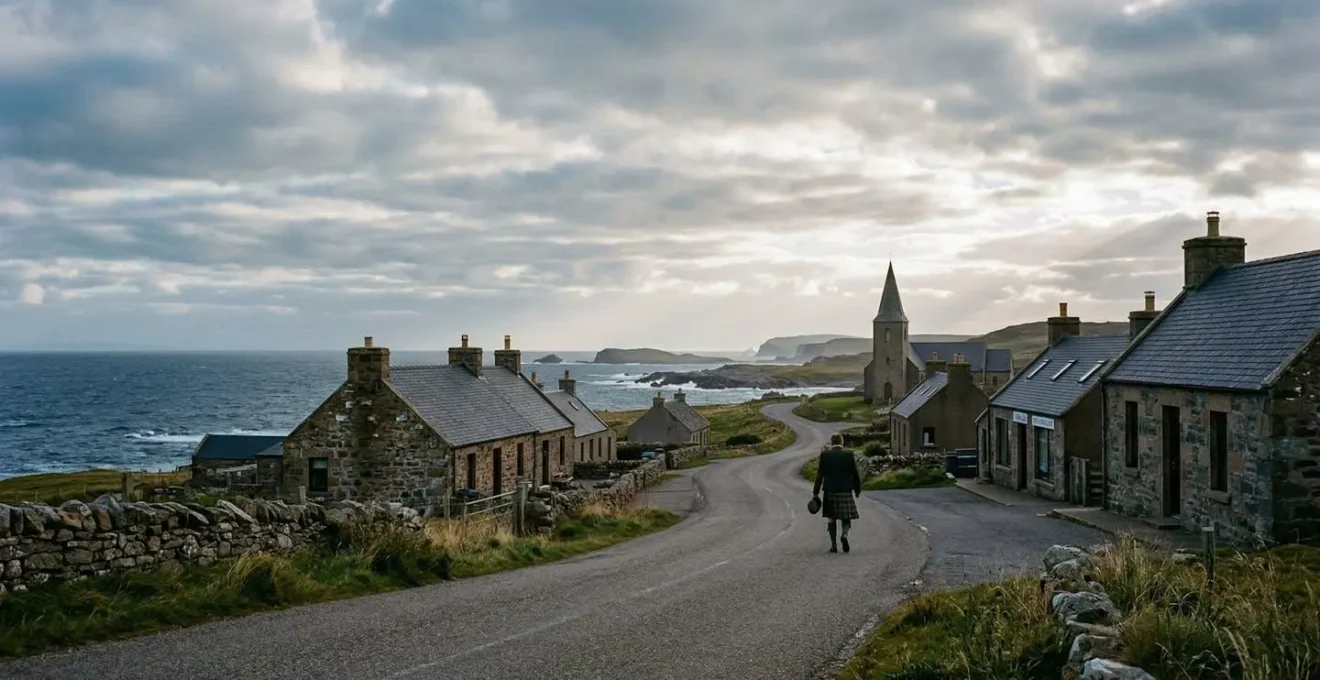
Contrary to the belief that Sunday on Lewis is an inconvenience, it is a deeply held spiritual rhythm that offers a unique form of peace, if a visitor is properly prepared.
- Practicality is paramount: Fuel and most groceries must be purchased on Saturday.
- Respect is not passive: It means understanding the theological stillness and participating in the quiet, not just tolerating closures.
Recommendation: Embrace the quiet as a rare opportunity for reflection and plan your logistics for Saturday to experience the island’s true character without stress.
A first-time visitor to the Isle of Lewis may be perplexed to find the playground swings tied up on a Sunday morning. This small act is a powerful symbol of a way of life that remains deeply anchored in faith and tradition. Here, the Sabbath is not merely a day of rest; it is a cornerstone of our culture, a ‘theological stillness’ observed with a seriousness that has faded in much of the modern world. While other Hebridean islands have a more relaxed approach, on Lewis and Harris, the observance is a defining characteristic of our community fabric. Many guidebooks will warn you that things are closed, presenting this as a problem to be solved.
We ask that you see it not as a restriction, but as a rhythm. This guide is offered from the perspective of one who holds this day sacred. Its purpose is not to list rules, but to help you, our guest, understand the ‘why’ behind our quiet Sundays. By engaging in what we call ‘prepared stewardship’—planning your practical needs in advance—you will not only avoid inconvenience but also gain a deeper appreciation for the profound peace that this day offers. It is an invitation to slow down, to observe, and to experience a tranquility that is increasingly rare. This article will guide you through the practical considerations, from fuel to food and ferries, so that your visit is both smooth and respectful.
To help you navigate your visit in harmony with our island’s rhythm, this guide provides practical advice on everything from Sunday openings to booking your ferry. Below is a summary of the key topics we will cover, ensuring you have all the information needed for a peaceful and well-planned trip.
Summary: A Visitor’s Guide to the Hebridean Sabbath and Logistics
- What Is Actually Open on Sundays in Lewis and Harris?
- Where are the Petrol Stations on the Long Island Chain?
- The Mobile Shop: How to Buy Groceries in Remote Villages?
- Card vs Cash: Why You Need Notes for Honesty Boxes?
- How to Book CalMac Ferries for the Outer Hebrides Without Getting Stranded?
- The Beach Landing: How to Fly into Barra Airport Safely?
- What to Do If You Get Sick on Barra or Vatersay?
- Marram Grass or Reed: What Makes a Hebridean Roof?
What Is Actually Open on Sundays in Lewis and Harris?
The straightforward answer is: very little. To understand the Sabbath on Lewis is to understand that commerce largely ceases. As noted by tourism authorities, most shops, petrol stations, cafes, pubs, and visitor attractions remain closed. This includes the large supermarkets in Stornoway and applies to the sale of alcohol. This is not a commercial decision but a community-wide observance of a day set aside for rest and worship. However, the day is not a void; it is simply different. The key is to shift one’s expectations from consumption to contemplation.
A handful of hospitality businesses, mainly hotels, do serve meals to the public, but booking is absolutely essential. For instance, the Doune Braes Hotel near the Callanish Stones is one known option. The visitor centre at Callanish may be closed, but the ancient stones themselves are always accessible, offering a profound sense of connection to history in the Sunday quiet. The true opportunity of a Hebridean Sunday lies in embracing what is open: the vast, empty beaches, the windswept coastal paths, and the raw beauty of the landscape. As the local tourism board wisely puts it:
The quiet and calm of Lewis and Harris on a Sunday is something worth observing, or even taking part in.
– Isle of Lewis Tourism, Official Isle of Lewis Information Guide
Attending a Gaelic church service to hear the powerful, unaccompanied psalm singing can be a deeply moving cultural experience for visitors, regardless of their own faith. This is the heart of the Sabbath rhythm. The day is not empty; it is filled with quiet, nature, and spirit.
Where are the Petrol Stations on the Long Island Chain?
For the unprepared visitor, a lack of fuel is the most common and stressful issue on a Sunday. The entire infrastructure of the island operates on a six-day commercial week. Across the vast expanse of Lewis, there is typically only 1 petrol station open on Sundays: Engebret’s Garage in Stornoway, and even then, its hours are restricted (usually 11am to 4pm). Relying on this single point of supply is a risky strategy, especially if you are exploring the more remote parts of the island like Uig or North Harris.
The only sensible approach is what we call prepared stewardship: you must treat Saturday as your day for provisioning. Filling your vehicle’s tank on Saturday is not a suggestion; it is a necessity for a stress-free Sunday. This simple act of foresight transforms the day from one of potential anxiety into one of peaceful exploration. You are then free to roam the winding single-track roads, confident that you have the means to return to your accommodation. Some smaller community shops may offer emergency fuel, but this is never guaranteed. Planning your routes to stay within a safe range is a mark of a wise traveller.
Your Saturday Fuel and Logistics Checklist
- Fill your vehicle’s fuel tank completely at a Stornoway or Tarbert garage before they close on Saturday evening.
- Purchase all necessary groceries, snacks, and drinks for your Sunday meals.
- Download offline maps of the islands, as mobile signal for navigation can be unreliable in remote areas.
- Check the opening times of any hotel restaurant you plan to visit on Sunday and make a reservation.
- Inform your accommodation host of your Sunday plans, as they may have valuable local advice.
This preparation is not a chore but an integral part of adapting to the island’s rhythm, ensuring your focus remains on the beauty around you, not on your fuel gauge.
The Mobile Shop: How to Buy Groceries in Remote Villages?
The romantic image of the mobile grocery van winding its way through remote townships is a cherished part of Hebridean history. While these services are much rarer now, the spirit of local provision lives on in a new form: the community-owned shop. In villages far from Stornoway, these small but vital stores have become the lifeblood of the community fabric. For a visitor, they are a lifeline, but they do not operate with the 24/7 convenience of the mainland.
These community shops, often run by local trusts, offer a curated selection of essentials and local produce. They are more than just stores; they are social hubs. However, their opening hours can be limited and vary from one village to the next. The key to using them effectively is local knowledge. Timetables are often posted on community hall notice boards or, increasingly, on local Facebook groups. Checking these online forums before you travel to a remote area is a vital piece of planning.
As the case of the shift from mobile vans to fixed community stores shows, the island is constantly adapting. These shops often have more flexible hours than the larger chains, but they will almost certainly be closed on a Sunday. Therefore, your Saturday shopping trip remains essential. Visiting a community shop on a weekday or Saturday, however, is an experience in itself—a chance to support the local economy directly and feel the pulse of village life.
Card vs Cash: Why You Need Notes for Honesty Boxes?
In an increasingly digital world, the Hebrides holds onto a tradition built on pure trust: the honesty box. Along the quiet roadsides, you will find unattended stalls offering everything from fresh eggs and home baking to handmade crafts and bags of peat for the fire. There is no shopkeeper, no card machine—just a simple box and a faith in the integrity of strangers. For many visitors, it is a charming and delightful discovery. For the prepared visitor, it is an opportunity to participate in our community fabric.
However, this system has a simple, non-negotiable requirement: cash. Your credit card or phone payment app is useless here. Carrying a supply of pound coins and small notes is as essential as carrying a waterproof jacket. It is a common mistake for tourists, accustomed to tapping for every purchase, to arrive at a beautiful spread of fresh scones or a lovingly crafted souvenir and have no way to pay. This leads to disappointment for you and a loss of vital income for the crofter who left those goods in good faith.
‘REMEMBER to bring cash with you. Our favourite places to stay at were crofter or community owned land, with donation boxes nailed onto fences. The only digitised donation box is via the West Harris Community Trust.’
– A Visitor’s Report, These Wild Journeys
The honesty box is a covenant of trust between producer and consumer. To use it is to affirm that trust. While a few forward-thinking trusts are introducing digital options, the vast majority of these micro-enterprises rely on physical money. Preparing for this by visiting a cash machine in Stornoway or Tarbert at the start of your trip is an act of respect for this cherished part of our island culture.
How to Book CalMac Ferries for the Outer Hebrides Without Getting Stranded?
The CalMac ferry is the lifeline of the Hebrides. It is our bridge to the mainland, and for many visitors, the true beginning of their island adventure. However, securing a place on these vessels, especially with a vehicle, requires foresight and what one might call providential planning. The days of simply turning up and expecting to board are long gone, particularly during the peak summer months. The fleet is aging, and disruptions can and do occur.
Booking well in advance—often 4-6 weeks ahead for a car or campervan in summer—is not merely advisable; it is critical. The popularity of the islands has grown, but the capacity of the ferries has not always kept pace. Furthermore, the service is vulnerable. While weather is a well-known factor, it is not the only one. Recent data showed that a reported 37% of CalMac cancellations in 2024 were due to technical faults with the vessels. This reality underscores the need for a resilient travel plan.
Always have your booking reference handy and monitor the CalMac service status website or app on the day of your sailing. If a disruption occurs, the company will endeavour to rebook you, but this can cause significant delays. The standby queue is an option of last resort and is often not available for campervans on popular routes. Flexibility is your greatest asset. If possible, build an extra day into your itinerary at the beginning or end of your trip to accommodate potential disruptions. This forethought will protect your peace of mind and ensure your Hebridean journey is not jeopardised by unforeseen circumstances.
The Beach Landing: How to Fly into Barra Airport Safely?
There is perhaps no more dramatic or beautiful arrival anywhere in the world than the flight into Barra. Here, the runway is the vast tidal beach of Traigh Mhòr, and the flight schedule is dictated not by a clock, but by the Atlantic Ocean. This is the ultimate expression of living in harmony with nature’s rhythm, a principle that echoes the observance of the Sabbath itself. For the over 14,000 passengers who land here annually, it is an unforgettable experience.
Safety is, of course, paramount and elegantly simple. The airport is operational only at low tide. When the tide comes in, the three runways disappear beneath the waves. Flight times are therefore variable each day, and intending passengers must check the schedule accordingly. When the windsock is flying, it signifies the airport is active, and the beach is closed to public access for the short period around the landing and take-off. At all other times, it is a stunning public beach.
Understanding the interplay between the tides and flight operations is key. This is managed with expert precision by the airport staff and pilots of the small Twin Otter aircraft that service the route. The following table illustrates how the ocean governs every aspect of the airport’s function.
| Aspect | High Tide | Low Tide |
|---|---|---|
| Runway Status | Submerged underwater | Available for landing |
| Flight Operations | No flights possible | 2-3 daily flights scheduled |
| Beach Access | Open to public | Closed when windsock flying |
| Tidal Range | Up to 3 meters coverage | Beach fully exposed |
For visitors, “flying safely” simply means trusting the professionals and respecting the clear signals. When the windsock is up, stay clear of the beach runways. It is a perfect metaphor for the island: nature sets the rules, and we, in our ingenuity and respect, adapt to them.
What to Do If You Get Sick on Barra or Vatersay?
A part of prepared stewardship when travelling to any remote location is to consider healthcare. On smaller islands like Barra and Vatersay, medical facilities are, by necessity, limited. While the beauty is immense, the infrastructure is not that of a city. It is vital for visitors to be aware of the process should they fall ill.
For non-emergency advice, the first port of call is the national helpline. The NHS 24 helpline is available 24/7 by dialling 111. This service provides medical advice and can direct you to the appropriate local care. On Barra, this is typically a community nurse on duty who handles minor ailments and injuries. For anything more serious, the situation changes significantly. There is no large hospital on the island.
A Note on Island Healthcare and Insurance
The healthcare infrastructure on Barra is designed for a small, resilient community. For serious medical conditions or emergencies, patients require medical evacuation by ferry or air ambulance to hospitals on the mainland. This reality makes one thing absolutely non-negotiable for any visitor: comprehensive travel insurance. Your policy must explicitly cover potential disruptions, such as ferry cancellations due to weather, and, most critically, the cost of emergency air evacuation, which can be substantial. Travelling without it is an unacceptable risk to yourself and to the island’s emergency resources.
This is not meant to cause alarm, but to instil a sense of responsible preparation. Pack a small first-aid kit for minor issues, have the NHS 24 number saved, and ensure your travel insurance is robust. By taking these sensible precautions, you can relax and enjoy the profound peace of the islands, secure in the knowledge that you are prepared for any eventuality.
Key Takeaways
- Sabbath observance on Lewis is a cultural and spiritual pillar, not a commercial choice; visitors should plan for near-total closure of services on Sundays.
- Practical preparation is essential: fill your fuel tank and buy all necessary groceries on Saturday to ensure a stress-free Sunday.
- Embrace the quiet: use Sunday as an opportunity to explore nature, walk the beaches, and experience the unique tranquility of the Hebridean Sabbath.
Marram Grass or Reed: What Makes a Hebridean Roof?
To walk through the Hebrides is to walk through layers of history. The quiet of the Sabbath is a tradition that has helped preserve our culture, and nowhere is that culture more tangibly visible than in our traditional architecture. The iconic Hebridean blackhouse, with its low, rounded form, is a testament to generations of resilience against the fierce Atlantic weather. A crucial element of this resilience is its roof, a marvel of natural engineering thatched from local materials.
The primary material used for thatching was traditionally marram grass, harvested from the coastal dunes, or sometimes local reed or even cereal straw, covered over with a net of ropes weighted down with stones. This design was ingenious. The thick thatch provided excellent insulation, while the absence of a chimney in the oldest blackhouses allowed the peat smoke to filter through the roof, curing the thatch and killing insects. These dwellings were long, single-room structures, often housing both the family and their cattle under one continuous roof, the body heat of the animals providing extra warmth.
Today, several of these blackhouses have been beautifully preserved as museums, such as the Gearrannan Blackhouse Village on Lewis. Visiting one provides a profound insight into the life our ancestors lived. It helps one understand the deep connection to the land and the resourcefulness required to thrive here. The skill of the thatcher, the strength of the marram grass, and the warmth of the peat fire are all threads in the same community fabric that upholds the Sabbath. They are symbols of a culture that respects the forces of nature and the rhythms of time.
Frequently Asked Questions about CalMac Ferries
How far in advance should I book CalMac ferries?
For vehicles and campervans, it is highly recommended to book 4-6 weeks ahead, especially for travel during the summer months. Foot passengers have more flexibility and can often book the day before, but even for them, booking in advance is wise during peak holiday periods to guarantee a spot.
What happens if my ferry is cancelled due to weather?
If your sailing is cancelled, CalMac’s disruption policy allows you to be rebooked onto the next available sailing at no extra cost. It is crucial to keep your booking reference number and contact their customer service team promptly to discuss alternative travel options. Be prepared for potential delays.
Can I get on as standby without a booking?
While standby is technically possible on some routes, it has become increasingly difficult and should not be relied upon, especially on popular crossings. Importantly, on certain routes, campervans and motorhomes are not permitted to join the standby queue at all without a confirmed booking, so advance planning is essential.