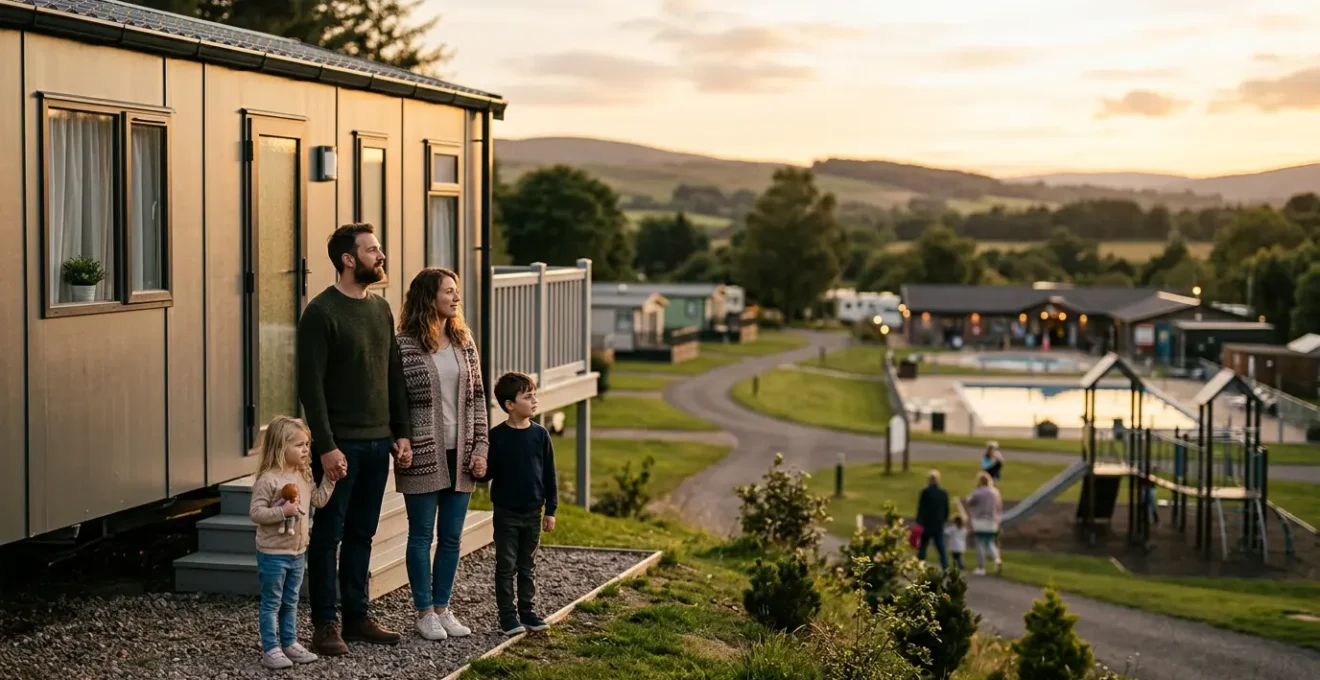
The real value of a holiday park pass isn’t the list of amenities, but whether those amenities can handle the pressure of peak season without causing your family more stress.
- The ‘upgrade’ to a Gold caravan is often visible in space and features, but the real win is guaranteed quality and less wear-and-tear.
- ‘Free’ access to pools and playbarns is worthless if they’re overcrowded. Look for parks with robust booking systems to guarantee your family’s fun.
Recommendation: Shift your mindset from ‘cost’ to ‘investment in a hassle-free holiday’. The extra spend is justified only if it actively reduces friction points like queues, boredom, and booking errors.
As a parent, planning a UK staycation often boils down to a single, nagging question: is it worth paying the premium for a big-name holiday park with all the bells and whistles? You see the glossy brochures promising endless fun—sparkling pools, lively entertainment, and premium accommodation. But you also see the price tag, which can be significantly higher than a simple cottage rental. The temptation is to believe that more features automatically equal more fun, but the reality on the ground, especially with kids in tow, is often far more complex.
Many will tell you to simply “check the facilities list” or “read the reviews,” but this advice misses the crucial point. The true value isn’t in what a park *offers*, but in how it *delivers* on those promises during a busy school holiday. It’s about the operational reality behind the marketing. Will the “heated indoor pool” be a relaxing swim or a chaotic human soup? Does “dog-friendly” mean clean and welcoming, or just a lingering smell of wet fur? The key isn’t just to look at the price, but to calculate the value-for-experience.
This guide moves beyond the brochure. We will dissect the common dilemmas parents face, from decoding caravan grades to assessing whether the on-site entertainment can genuinely keep a teenager from being bored. We’ll explore the hidden friction points, like booking systems and misleading reviews, that can make or break your trip. The goal is to arm you with a new perspective: to see the park pass not as a ticket to features, but as an investment in comfort and quality family time. Is it an investment worth making? Let’s find out.
To help you navigate these crucial decisions, we’ve broken down the key factors to consider. This guide will walk you through the tangible differences in accommodation, the reality of using on-site facilities, and the common pitfalls to avoid.
Summary: Decoding the True Value of a Holiday Park Pass
- Gold vs Bronze Static Caravans: Is the Upgrade Visible?
- Which Holiday Parks Have Indoor Pools for Rainy Scottish Days?
- The Booking Mistake That Loses You 100% of Your Deposit
- Are ‘Dog-Friendly’ Caravans Smelly or Clean?
- On-Site Shop vs Local Supermarket: How Much More Do You Pay?
- The ‘Indoor Playbarn’ Factor: Is It Big Enough for high Capacity?
- How to Spot Fake Reviews on TripAdvisor for Scottish Guesthouses?
- Which Holiday Parks Offer the Best Teenager Activities to Avoid Boredom?
Gold vs Bronze Static Caravans: Is the Upgrade Visible?
One of the first choices you’ll face is the accommodation grade. It’s easy to dismiss ‘Gold’ or ‘Platinum’ options as a marketing ploy, especially when ‘Bronze’ or ‘Saver’ is so much cheaper. But is the difference purely cosmetic, or does it impact your family’s comfort? The answer is yes, the upgrade is almost always visible and, more importantly, *feelable*. Bronze caravans are the workhorses of a holiday park. They’ve seen more families, more muddy boots, and more enthusiastic children. While cleaned, they often show more wear and tear.
Upgrading to Gold is less about luxury and more about mitigating risk. You’re paying for a newer, wider caravan that’s less likely to have a lumpy mattress or a weak shower. According to one detailed comparison of Haven’s accommodation grades, the premium tiers offer tangible benefits. For instance, Gold caravans are often wider, include wrap-around decking with furniture, and feature an en-suite toilet in the master bedroom—a true game-changer for a family of four. You might also get a dishwasher and dedicated parking next to your caravan, two features that significantly reduce daily holiday friction.
Think of the upgrade as an insurance policy against disappointment. While a Bronze caravan can be perfectly fine, a Gold one virtually guarantees a certain standard of comfort and modernity. For a family juggling the needs of young children, the extra space, second toilet, and convenience of a dishwasher can be the difference between a relaxing break and a stressful one. The upgrade isn’t just visible; it’s a strategic choice for a smoother holiday experience.
Which Holiday Parks Have Indoor Pools for Rainy Scottish Days?
For any family holiday in Scotland, an indoor pool isn’t a luxury; it’s an essential rainy-day rescue plan. Nearly all major parks will advertise one, but the quality and accessibility of these facilities can vary wildly. The key issue is “amenity saturation”—when a popular facility becomes so crowded that it’s no longer enjoyable. A huge, feature-packed pool is useless if you can’t get in or it’s too packed to move. This is where the park’s operational management becomes critical.
Many of the best parks have moved beyond a free-for-all system. To manage capacity and ensure a better experience, they implement booking systems. For example, Parkdean Resorts uses a pool timetable system across its Scottish parks, allowing families to secure a slot. This forethought is a massive plus. It turns a potential source of frustration into a guaranteed activity. When choosing a park, looking at *how* they manage pool access is just as important as the pool itself.
The table below highlights how different Scottish parks approach their indoor water facilities, a crucial factor for your value-for-experience calculation.
| Holiday Park | Indoor Pool | Special Features | Capacity Management |
|---|---|---|---|
| Parkdean Resorts (7 parks) | Heated indoor | Various activities | Pool timetable system |
| Eyemouth Holiday Park | Local public pool access | 5 min walk, included pass | Public pool schedule |
| Pettycur Bay | Deck level pool | River Forth views, 28-29°C | Pre-booking available |
| Landal Piperdam | Indoor pool | Little Pipers soft play area | Session management |
To make the most of this key amenity, a little strategy goes a long way. Don’t just show up and hope for the best. Be proactive by checking the park’s specific policies before you even finalise your booking. This ensures the main attraction doesn’t become your main disappointment.
- Book sessions in advance during peak times to avoid disappointment.
- Check if your pass includes unlimited pool access or has session restrictions.
- Consider smaller, quieter parks like Seton Sands for potentially better pool availability.
- Look for parks with additional water features beyond basic pools to spread out the crowds.
- Verify if spectator areas have adequate seating for non-swimming parents.
The Booking Mistake That Loses You 100% of Your Deposit
The excitement of booking a holiday can sometimes overshadow the critical details buried in the terms and conditions. The most common and costly mistake families make is not understanding the cancellation policy, particularly with “low deposit” offers. These deals are tempting, but they often come with a catch. The initial low deposit might be non-refundable, and cancelling later could make you liable for a much larger percentage of the total holiday cost. This isn’t just an inconvenience; it can be a significant financial blow, especially when dealing with unofficial or fraudulent sellers. In fact, reports show that in 2024 alone, over £11 million was lost to holiday fraud in the UK, often through fake social media deals that disappear after taking a deposit.
To protect yourself, always book directly with the holiday park operator or through a registered ABTA/ATOL agent. Be extremely wary of “too good to be true” offers on platforms like Facebook Marketplace. Before paying anything, scrutinise the cancellation terms. What happens if you need to cancel a month out? A week out? The policy should be crystal clear. The following image of someone carefully reviewing documents is a reminder of the diligence required.
The danger often lies in what isn’t said. As one consumer report highlights, the verbal explanation can differ from the written contract. A family might be told the deposit is all they risk, when the small print commits them to more. As Michelle Simons recounted in a Money Wellness report after her experience with TUI:
The Tui agent handed her a laminated card with T&Cs, which she skimmed through. She claims that the agent did not verbally explain that she’d be liable to pay a larger deposit if she cancelled later.
– Michelle Simons, Money Wellness Consumer Report
This illustrates a critical friction point: the gap between a quick sales pitch and the legally binding contract. Always take five minutes to read the cancellation policy yourself. That five minutes could save you 100% of your deposit—or more.
Are ‘Dog-Friendly’ Caravans Smelly or Clean?
For many families, a holiday isn’t complete without their four-legged member. This has led to a surge in ‘dog-friendly’ accommodation, but it also brings a common worry: will the caravan be clean, or will it smell of past canine guests? The quality of pet-friendly options is a direct reflection of a park’s operational standards. A good holiday park doesn’t just *allow* dogs; it has a robust system for managing pet-friendly units.
Reputable parks like Haven have specific caravans designated for pets, which are subject to a specialised deep-cleaning protocol between stays. This is the crucial difference. These protocols often involve using different cleaning solutions, airing the caravan for longer, and paying special attention to upholstery and carpets. The goal is to ensure that the next family, whether they have a pet or not, enters a fresh and clean environment. When booking, don’t just ask if a park is “dog-friendly”; ask what their cleaning process is for these specific units.
Case Study: Haven’s Pet-Friendly Standards
Haven demonstrates a clear system for managing pet-friendly stays. The company offers designated pet-friendly caravans in all of its grades except for the very top tier (Signature). This ensures a wide choice for pet owners. Crucially, they require you to declare your pet at the time of booking to ensure you are allocated one of these specific, prepared accommodations, preventing cross-contamination with non-pet units.
Upon arrival, it’s wise to do your own quick inspection. This isn’t about being difficult; it’s about ensuring you get the quality you paid for. If the standard isn’t up to scratch, report it to reception immediately. Most parks will be keen to resolve the issue right away. Here’s a quick checklist for your arrival:
- Immediately check upholstery and corners of rooms for any lingering pet hair.
- Pay attention to any odours in carpets and curtains within the first hour.
- Document any pre-existing damage (like scratches on doors) with timestamped photos on your phone.
- If the standard is poor, don’t hesitate to request an immediate re-clean or ask to be moved.
- For family members with allergies, ask if hard flooring options are available, as they are easier to clean thoroughly.
On-Site Shop vs Local Supermarket: How Much More Do You Pay?
The on-site convenience store is a staple of every holiday park, and it’s a lifesaver for that forgotten bottle of ketchup or an emergency loaf of bread. But relying on it for your main weekly shop is a classic budget-busting mistake. You are paying a significant premium for convenience—what could be called a ‘convenience tax’. Prices for everyday items like milk, cereal, and pasta can be anywhere from 30% to 100% higher than at a nearby supermarket.
Imagine this common scenario: on your first evening, you need milk, bread, butter, and some biscuits. In a local Asda or Tesco, this might cost you around £5. In the on-site shop, the same basket could easily be £8-£9. While an extra £3-£4 doesn’t sound like much, multiply that across a week’s worth of groceries, snacks, and drinks, and you could be spending an extra £50-£70 that could have been used for a family meal out or an extra activity.
The best strategy is a hybrid one. Plan ahead and do a ‘big shop’ at a major supermarket on your way to the park or on your first day. Most holiday parks are within a 10-15 minute drive of a larger town with a Tesco, Sainsbury’s, or Aldi. Many supermarkets also offer a ‘Click & Collect’ service, which is a fantastic way to save time. You can place your order online a day or two before you travel and simply pick it up en route to the park. This gives you the best of both worlds: the cost-effectiveness of a supermarket and the time-saving convenience that a holiday demands. Use the on-site shop for what it’s best for: top-ups, treats, and emergencies, not your core supplies.
The ‘Indoor Playbarn’ Factor: Is It Big Enough for high Capacity?
Alongside the pool, the indoor playbarn or soft play area is a cornerstone of the family holiday park experience. It’s the go-to zone for burning off youthful energy on a wet afternoon. But just like the pool, its real value is determined by capacity. A small, overcrowded playbarn can quickly become a stressful environment for both parents and children. As market research shows an increasing demand for indoor facilities at UK holiday parks, the pressure on these spaces is greater than ever.
When you see ‘indoor playbarn’ in a brochure, you need to look for clues about its scale. Is it a small corner in the main complex, or a large, dedicated building? Photos can be deceiving. A wide-angle lens can make a tiny room look vast. Look for photos that include people, as they provide a sense of scale. A good playbarn isn’t just about size; it’s about smart design. The best ones have separate, well-defined areas for toddlers and older children, preventing little ones from being overwhelmed by boisterous kids.
As the image above suggests, a well-designed space will also have ample, comfortable seating for parents. This is a non-negotiable feature. You need a space where you can relax with a coffee while keeping a watchful eye on your children. The best parks understand this and provide a café or seating area with good sightlines to the play structures. Before you book, try to find visitor photos or vlogs on YouTube that show the playbarn in action during a busy period. This will give you a far more realistic impression of its capacity than the park’s own marketing materials.
How to Spot Fake Reviews on TripAdvisor for Scottish Guesthouses?
TripAdvisor and other review sites are an invaluable tool for parents. They offer a seemingly unfiltered look into the real guest experience. However, the system is not foolproof, and fake reviews—both overly positive ones posted by owners and overly negative ones posted by competitors—can skew your perception. Learning to read between the lines and spot the fakes is a critical skill for making an informed choice, especially when looking at smaller, independent guesthouses alongside big parks.
A genuine review often contains a balance of pros and cons and specific, sensory details. A fake review, by contrast, is often vague, overly emotional, and lacks concrete examples. For instance, a fake positive review might say, “Everything was absolutely perfect! An amazing stay!” without mentioning a single specific detail. A real review might say, “The room was spotless and the breakfast was delicious, though the Wi-Fi was a bit slow in the evening.” The presence of minor, constructive criticism often lends credibility.
Developing a critical eye is your best defence against being misled. Don’t just look at the star rating; actively audit a handful of reviews for any property you’re seriously considering. The following checklist provides a simple but effective process for vetting reviews and building a more accurate picture of a property.
Your 5-Step Audit for Spotting Fake Reviews
- Check the Profile: Click on the reviewer’s profile. Do they have a history of reviews, or is this their only one? A single, glowing 5-star review (or a single, scathing 1-star review) from a brand-new profile is a major red flag.
- Analyse the Language: Look for generic, non-specific praise or criticism. Is the language overly emotional or full of marketing buzzwords? Genuine reviewers tend to describe their personal experience with specific details.
- Look for Patterns: Read several reviews. Do you see multiple reviews posted around the same date using similar phrasing? This can be a sign of a coordinated campaign to boost or damage a rating.
- Cross-Reference Details: Compare the details mentioned in reviews. If one review raves about the “brand-new power shower” and another from the same week complains about “low water pressure,” it warrants suspicion. Consistency across multiple reviews is a good sign.
- Verify with Photos: Pay more attention to reviews that include traveller photos. These provide unedited, real-world proof of what the rooms, facilities, and food actually look like, cutting through any potential written deception.
Key Takeaways
- The real cost of a holiday park is measured in potential stress. A higher price is only justified if it buys you tangible comfort and convenience.
- “Free” amenities are only valuable if they are accessible. Prioritise parks with booking systems for high-demand facilities like pools.
- Protect your investment by reading cancellation policies carefully and booking directly with reputable operators to avoid costly scams.
Which Holiday Parks Offer the Best Teenager Activities to Avoid Boredom?
If you’re travelling with teenagers, you know that their needs are vastly different from those of younger children. The standard kids’ club and character breakfast won’t cut it. The dreaded phrase “I’m bored” can single-handedly derail a family holiday. Therefore, choosing a park that genuinely caters to teens is one of the most important ‘value-for-experience’ calculations a parent can make. The extra cost of a park pass is often most justified here, as it can provide the structured independence and social opportunities that teenagers crave.
The best holiday parks for teens offer a blend of high-energy activities, dedicated social spaces, and a degree of freedom. Look for parks with features like climbing walls, high ropes courses, archery, or water sports. These are not just activities; they are confidence-builders and ice-breakers. Equally important is the digital infrastructure. In today’s world, reliable park-wide Wi-Fi is a non-negotiable utility for a teenager. It’s their link to friends back home and their personal entertainment hub.
A ‘teen zone’ or ‘chill-out room’ separate from the main family entertainment area is another hallmark of a teen-friendly park. These spaces, often equipped with game consoles, pool tables, and comfortable seating, give them a place to hang out with others their own age without feeling supervised. Before booking, use this checklist to assess a park’s true teen appeal:
- Check for dedicated teen zones that are physically separate from areas for younger children.
- Verify the quality and coverage of the Wi-Fi. Check recent reviews for comments on its speed and reliability.
- Look for sports facilities that encourage social interaction, like basketball courts or 5-a-side football pitches.
- Assess if the ‘cool’ activities (like go-karting or laser tag) are included in the pass or if they incur significant extra costs.
- Evaluate the park layout for safe, independent movement. Can your teen walk from the caravan to the activity hub safely on their own?
- Check the evening entertainment schedule. Is there anything appropriate for teens, or is it all geared towards young families or adults?
So, is the holiday park pass worth it? If you use this guide to look beyond the marketing and assess the operational reality, the answer can be a resounding yes. The extra cost is justified when it buys you a newer caravan, guaranteed access to a well-managed pool, and engaging activities that keep your teenagers happy. By being a savvy consumer, you can ensure your investment pays off in what matters most: a genuinely relaxing and memorable family holiday.