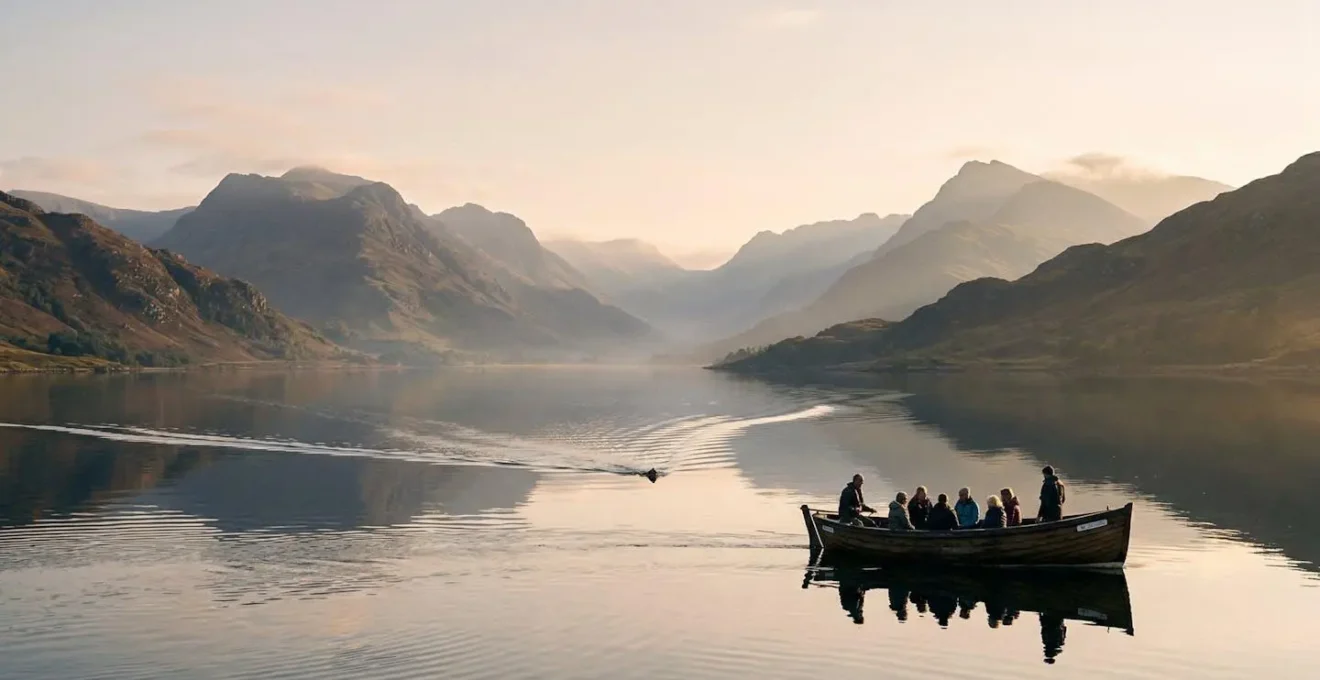
The most ethical wildlife tour isn’t just the one with an accreditation; it’s the one you’ve vetted by learning to read animal behaviour and operator philosophy like a conservationist.
- Guaranteed sightings are a major red flag, often leading to practices that pressure wildlife and guides.
- Your own preparedness, from the right camera lens to seasickness medication, directly impacts your ability to be a respectful observer.
Recommendation: Prioritise operators who advertise expert guides and educational experiences over those who promise specific animal sightings.
The thrill of seeing a Minke whale breach the steely surface of a Scottish loch or a puffin returning to its burrow, beak full of sand eels, is an unparalleled experience. As a nature enthusiast, you’re drawn to these wild moments, but a quiet concern likely accompanies your excitement: how can you ensure your presence doesn’t harm the very creatures you’ve travelled to admire? You want to capture the perfect photograph without causing a seal to abandon its pup or a pod of dolphins to alter its course.
The standard advice is to “choose an accredited tour” or “read the reviews.” While these are starting points, they don’t fully empower you. Reviews can be misleading, sometimes rewarding operators for unethically close encounters that produce great photos. Accreditations are vital, but understanding the principles behind them is what truly transforms you from a passive tourist into a conscious observer. The real key to an ethical tour lies not in a certificate on a wall, but in developing your own ‘observational intelligence’.
This guide moves beyond the checklists. As a conservationist, I will equip you with the knowledge to interpret the subtle language of the wild and the operational DNA of tour companies. We will explore the specific stress signals in marine life, dissect why ‘guarantees’ are a red flag, and determine the right gear to maintain respectful distances. By the end, you won’t just be choosing a tour; you’ll be actively participating in the conservation of Scotland’s magnificent wildlife.
To help you navigate this essential topic, this article is structured to build your expertise, from understanding animal behaviour to making the final, ethical choice. Here is a summary of what we will cover.
Summary: A Conservationist’s Framework for Choosing a Scottish Wildlife Tour
- What Are the Signs of Stress in Marine Wildlife You Must Ignore?
- Dramamine or Wristbands: Prevention Tactics for Rough Scottish Seas?
- Why ‘Guaranteed Sightings’ Policies are Often a Red Flag?
- Puffins or Deer: Which Month Offers the Best Variety of Species?
- Lens Selection: What Focal Length Do You Need for Boat Photography?
- Red Deer or Golden Eagles: Which Species Is Easier to Spot Without Disturbing?
- Divers vs Ducks: Identifying Waterfowl on Highland Lochs?
- How to Spot Otters in Scottish Lochs Without Scaring Them Away?
What Are the Signs of Stress in Marine Wildlife You Must Ignore?
The most fundamental skill in ethical wildlife watching is learning to read animal behaviour. Wild animals communicate their discomfort long before they flee. Recognising these subtle cues is your first and most important responsibility as an observer. Ignoring them contributes to a phenomenon known as cumulative stress, where repeated minor disturbances can have significant long-term impacts on health, breeding, and survival. An ethical operator will always prioritise the animal’s welfare, often pointing out these signals as an educational opportunity.
Seals exhibiting rapid ‘head-bobbing’, dolphins making sudden high-pitched whistles, or whales taking quick, shallow breaths are not signs of curiosity; they are clear indicators of anxiety caused by proximity. Similarly, a flock of auks performing a ‘crash dive’ is a flight response, not a playful display. A responsible guide will immediately slow down, change course, or increase distance when these behaviours are observed. As detailed in the Scottish Marine Wildlife Watching Code (SMWWC), the goal is to observe animals in their natural state, not to provoke a reaction.
The best operators, like the BBC’s Wild Isles consultants Wild Discovery, take a proactive approach. They implement strategies like cutting engines over 300 meters from marine mammals and using slow, parallel approaches rather than heading directly toward the animals. Their guides are trained to interpret these subtle behavioural shifts, ensuring they pull back long before obvious stress signals appear. When you are on a tour, your role is to watch for these signs and be prepared to voice a concern if the operator seems to be ignoring them.
Dramamine or Wristbands: Prevention Tactics for Rough Scottish Seas?
Your personal comfort on a wildlife tour is not a selfish concern; it is directly linked to your ability to be an ethical observer. The North Atlantic and North Sea are notoriously unpredictable, and being prepared for rough seas is a crucial part of responsible tourism. A seasick passenger is a distracted one, less able to listen to the guide’s instructions, less aware of their surroundings, and physically incapable of holding binoculars or a camera steady. This state of discomfort prevents you from fully engaging in a respectful and enriching observation experience.
As the Scottish Marine Wildlife Watching Code aptly states:
Being prepared is part of being a responsible wildlife tourist – a seasick tourist is less aware, less able to follow guide instructions, and can’t fully engage in a respectful observation experience
– Scottish Marine Wildlife Watching Code, NatureScot Guide to Best Practice
Whether you choose Dramamine, ginger capsules, or acupressure wristbands, the key is to find what works for you and use it proactively. Beyond medication, your position on the boat plays a huge role. The most stable area is typically low down and in the centre of the vessel, over its centre of gravity. Avoid the bow (front), which experiences the most vertical movement, and the high flybridge, which can have a pronounced side-to-side roll.
Choosing a more stable vessel, like a catamaran, can significantly reduce the risk of seasickness compared to a smaller, more agile Rigid Inflatable Boat (RIB). While RIBs can often get to sightings faster, their high-speed and bouncy nature can be both uncomfortable for passengers and more disruptive to certain species due to engine noise. By preparing yourself for the conditions, you ensure you remain an asset to the tour—alert, observant, and ready to respect the wildlife.
Why ‘Guaranteed Sightings’ Policies are Often a Red Flag?
In the world of wildlife tourism, few phrases should raise more suspicion than “guaranteed sightings.” While it sounds like a confident promise of a great day out, it often reveals an operator’s philosophy that prioritises profit over animal welfare. Wild animals operate on their own terms, not on a tour company’s schedule. A guarantee creates immense pressure on guides and boat skippers to deliver a specific sighting, which can lead them to push ethical boundaries.
This pressure may manifest in several harmful ways: pursuing animals too aggressively, staying with them for too long, getting too close, or cutting off their path. These actions cause stress and can disrupt vital behaviours like feeding, resting, or caring for young. In fact, responsible tourism research indicates that tours with ‘no guarantee’ policies report 30% lower disturbance incidents than those promising sightings. An operator who is honest about the unpredictability of nature is more likely to respect it.
Look for operators who frame the experience differently. A truly ethical company will guarantee things they can control: an expert marine biologist on board, a comfortable and safe vessel, and a commitment to ethical practices. They sell an educational journey and the *chance* of an encounter, not a transactional sighting.
Case Study: Basking Shark Scotland’s Serendipity-First Model
A prime example of this philosophy is Basking Shark Scotland. They explicitly state they cannot guarantee sightings. Instead, they guarantee a fascinating day on the water with knowledgeable guides who are passionate about the entire marine ecosystem. If the main attraction, the basking shark, doesn’t appear, the focus shifts to other incredible marine life like seals, seabirds, or dolphins. This model, often offering partial refunds or alternative experiences, builds trust and demonstrates a genuine commitment to wildlife welfare, a practice they’ve upheld since their founding in 2012.
Puffins or Deer: Which Month Offers the Best Variety of Species?
Scotland’s wildlife calendar is a dynamic and ever-changing spectacle, with each month offering unique opportunities. However, an ethical approach requires looking beyond simple presence and considering the animals’ life cycles. The best time to view a species is not necessarily when they are most abundant, but when your presence will be least disruptive. An ethical viewing calendar is less about “what can I see?” and more about “how can I see it responsibly?”
Here is a seasonal guide to ethical viewing in Scotland:
- April-May: This is a fantastic time for seabirds. Species like puffins, guillemots, and razorbills return to their cliff-side colonies. The key is to use established viewpoints and powerful optics. Early nesting is a critical phase, so avoid any activity that could cause birds to leave their nests, such as approaching cliff edges or making loud noises.
- June-July: Peak puffin viewing season. The birds are busy feeding their chicks (“pufflings”). Stick to marked paths at famous colonies like the Isle of May or Lunga. The sheer number of birds can make it seem like your presence doesn’t matter, but cumulative disturbance is a real threat.
- August-September: As the seabirds depart, the drama moves inland. The red deer rut begins, a spectacular display of roaring stags. Use your vehicle as a hide on public roads or join a guided tour that understands safe viewing distances (often 100m+). Never walk directly into a rutting area.
- October-November: This is seal pupping season for grey seals. Pups are incredibly vulnerable and are often left alone on beaches while their mothers hunt. A human presence can cause the mother to abandon the pup. A minimum distance of 100 metres is essential.
- December-March: Winter brings migratory geese and ducks. While a quieter time for tourism, it’s a great opportunity to support local operators with lower pressure and potentially have more intimate, respectful encounters with wintering wildlife.
Lens Selection: What Focal Length Do You Need for Boat Photography?
For the wildlife photographer, the camera is a tool for capturing memories, but the choice of lens is a statement of ethical intent. A long telephoto lens is not about “spying” on wildlife; it is the single most important piece of equipment for respecting their space. An ethical operator who maintains proper distance from animals will invariably recommend, or even require, that photographers come equipped with appropriate lenses. If you can get a frame-filling shot of a seal with your smartphone, the boat is almost certainly too close.
The required focal length is a direct function of your distance from the subject. For marine wildlife in Scotland, where responsible operators maintain significant buffer zones, a longer lens is essential. The Wildlife Safe (WiSe) Scheme, a key accreditation for UK operators, trains its members to maintain distances that necessitate good optics. As part of their best practices, WiSe-accredited operators advocate for photographers to avoid flash, reject the use of bait to lure animals closer, and crucially, to refrain from geotagging photos of sensitive species on social media.
The right lens allows you to capture stunning, natural behaviour without causing disturbance. An unstable boat and a fast-moving subject mean you’ll also need a fast shutter speed, so a lens with a wider aperture (e.g., f/4 or f/5.6) is highly advantageous.
| Focal Length | Minimum Safe Distance | Best For | Ethical Rating |
|---|---|---|---|
| 300-400mm | 50-100m | Seabirds, seals on shore | Excellent |
| 500-600mm | 100-200m | Whales, dolphins, eagles | Optimal |
| 100-200mm | 20-50m | Landscapes with wildlife | Good with caution |
Ultimately, investing in a good telephoto lens is investing in ethical practice. It empowers you to be a patient, respectful photographer who values the well-being of the subject above the shot itself.
Red Deer or Golden Eagles: Which Species Is Easier to Spot Without Disturbing?
Understanding which species are more tolerant of human presence is key to planning a low-impact wildlife-watching trip. The concept of “flight initiation distance” (FID)—the distance at which an animal will flee from an approaching threat—varies enormously between species and even within the same species depending on location and season. In Scotland, a red deer in a park-like setting may be quite habituated, while a golden eagle will have a very low tolerance for human proximity, especially near its nest.
Red deer are generally one of the easier large mammals to spot without causing disturbance. They are often found in large herds in open glens and are more habituated to the presence of vehicles on public roads. Using your car as a mobile hide is a highly effective and low-impact technique. The animals perceive a vehicle as a large, non-threatening object, whereas a person on foot is recognised as a potential predator.
Golden eagles, by contrast, are among the most sensitive. They are shy, elusive birds of prey with vast territories. According to NatureScot wildlife watching guidelines, golden eagles require a minimum 500m viewing distance during their nesting season (March-July), while red deer can often be observed ethically from 100m using established paths. Approaching an eagle’s nest, even unknowingly, can cause the parents to abandon it, leading to the failure of the brood. For this reason, attempting to find golden eagles is best done with a licensed guide who knows the local territories, safe viewing points, and the birds’ behaviour intimately.
The easiest species to spot without disturbance is therefore the one with a shorter FID and greater habituation to non-threatening human activity. For the independent observer in Scotland, this will almost always be the red deer over the golden eagle.
Key takeaways
- True ethical wildlife watching is not about a checklist, but about developing the ‘observational intelligence’ to read animal behaviour and environmental cues.
- An operator’s philosophy is revealed in their promises: distrust ‘guaranteed sightings’ and trust those who guarantee expertise and education.
- Your personal equipment and preparation, from telephoto lenses to seasickness tablets, are not just for comfort—they are critical tools for respectful and non-disruptive observation.
Divers vs Ducks: Identifying Waterfowl on Highland Lochs?
The serene surfaces of Scotland’s Highland lochs are teeming with birdlife, but not all waterfowl are created equal in the eyes of conservation law. Learning to distinguish between a common mallard and a highly protected Black-throated Diver is more than an academic exercise; it’s a practical application of ethical wildlife watching. Correct identification from a distance allows you to give sensitive species the extra space they require, transforming you from a simple spectator into an active participant in conservation.
The key to remote identification lies in observing behaviour and silhouette, not just plumage. Ducks, like mallards or tufted ducks, tend to float high on the water, often “dabbling” with their heads down or making short, splashy dives. Divers (like the Black-throated or Red-throated Diver), in contrast, sit very low in the water, their backs almost flush with the surface. They are master fishers, executing long, elegant dives that can last 30-60 seconds, and they resurface often a surprising distance away. They also have a distinct, dagger-like bill compared to the flatter bill of most ducks.
Your ability to make this distinction is valuable. The BTO’s BirdTrack platform, a citizen science initiative, relies on observations from the public to monitor bird populations. An interesting finding from their data shows a significant trend: tourists who learned to identify birds through these behavioural patterns, rather than by trying to get close for a better look at plumage, contributed 40% more usable data for conservation planning. By honing your identification skills from afar, your hobby directly supports scientific research and the protection of these magnificent birds.
How to Spot Otters in Scottish Lochs Without Scaring Them Away?
Spotting a wild otter is often considered the pinnacle of a Scottish wildlife trip. These elusive, intelligent creatures are masters of camouflage and have incredibly acute senses. Seeing one requires abandoning the typical tourist mindset and adopting the patience and strategy of a field naturalist. The principles are simple but require discipline: silence, stillness, and using the environment to your advantage.
Otters have an exceptional sense of smell, so your first consideration must always be the wind. Position yourself downwind of the area you intend to watch. Your next most powerful tool is a pair of good binoculars (at least 8x magnification). With these, you don’t need to be physically close. Scan the edges of kelp beds, particularly on a rising tide, looking not for an otter itself, but for its tell-tale sign: a V-shaped wake as it moves just below the surface. Also, scan prominent rocks along the shoreline for ‘spraints’—the otter’s tarry, sweet-smelling droppings—which are used to mark territory. Finding fresh spraints is a sure sign that an otter is active in the area.
Once you are positioned, the hardest part begins: you must remain absolutely still and silent. Otters are more frightened by movement and noise than by a stationary human shape. Brightly coloured clothing can also give you away. The best times for otter watching on sea lochs are often a few hours before and after high tide, when they are actively hunting for fish in the shallower waters.
Your Action Plan: Patient Otter-Watching Methodology
- Find a downwind position: otters have an excellent sense of smell and will avoid human scent.
- Scan for V-shaped wakes using binoculars, focusing on kelp bed edges at mid-tide.
- Look for spraints (droppings) on prominent rocks – fresh ones indicate recent activity.
- Remain absolutely still and silent once positioned – movement frightens otters more than presence.
- Time visits for 2-3 hours before high tide on sea lochs when otters actively hunt in shallows.
By embracing this conservationist’s mindset—learning to read the animals, understanding the operators, and preparing yourself and your equipment for ethical encounters—you transform your trip. You become more than a tourist; you become a temporary guardian, ensuring that the wild heart of Scotland continues to beat strongly for generations to come. The most memorable wildlife encounters are not the ones that are forced, but the ones that are earned through patience and respect.
Frequently Asked Questions about Identifying Scottish Wildlife
How can I tell divers from ducks without getting close?
Divers sit lower in water with their backs almost submerged, execute long dives of 30-60 seconds, and have sharp, pointed bills. Ducks float higher on the water, tend to dabble or make brief dives, and have flatter, broader bills.
Which species require extra caution?
Black-throated and Red-throated Divers are protected under Schedule 1 of the Wildlife and Countryside Act. It is a legal offense to disturb them at or near the nest. Always maintain at least a 200m distance and never knowingly approach a potential nesting site.
When is the best viewing season?
The best time to see divers in their stunning breeding plumage is from April to September. From October to March, the lochs are home to a wonderful variety of wintering ducks and visiting waterfowl from Iceland and Scandinavia.