Culture and Heritage
When you pitch your tent beneath ancient trees or park your camper near historical landmarks, you’re not just occupying space—you’re stepping into a living tapestry of human stories, traditions, and sacred grounds. Culture and heritage transform ordinary camping trips into profound journeys of discovery, connecting travelers with the customs, histories, and values that have shaped landscapes for generations. Whether you’re exploring indigenous territories, following heritage trails, or camping near UNESCO World Heritage sites, understanding the cultural dimension of your outdoor adventures enriches both your experience and the communities you visit.
Yet many campers remain unaware of the cultural significance embedded in their chosen destinations. That unmarked meadow might be a traditional gathering place. Those rock formations could hold spiritual meaning. This comprehensive resource examines how culture and heritage intersect with camping and travel, offering practical insights on recognizing cultural landscapes, respecting local traditions, engaging authentically with heritage sites, and becoming a culturally conscious traveler who leaves positive footprints wherever the journey leads.
Why Cultural Awareness Matters for Modern Campers
The camping boom has brought unprecedented numbers of visitors to culturally significant areas, making awareness more critical than ever. Cultural competence in outdoor recreation means recognizing that nature and culture are inseparable—landscapes are shaped by human interaction, stories, and practices spanning centuries.
Consider this: when you camp in the American Southwest, you’re in territories where Ancestral Puebloan communities thrived for over a millennium. In Scandinavia, you might encounter Sámi reindeer herding routes that predate modern nations. Australian campers often travel through Country with 65,000 years of continuous indigenous custodianship. Each location carries layers of meaning that standard camping guides rarely address, yet understanding these contexts prevents inadvertent disrespect and opens doors to richer experiences.
Culturally aware camping also supports heritage preservation. When travelers understand why certain areas require specific behaviors—no climbing on ancient petroglyphs, staying on designated paths near burial grounds, or seeking permission before entering sacred spaces—they become active participants in protecting irreplaceable cultural resources for future generations.
Recognizing Cultural Landscapes in Camping Destinations
Not all culturally significant sites come with interpretive signs or visitor centers. Developing the ability to recognize cultural landscapes enhances both safety and respect during your camping adventures.
Physical Indicators of Cultural Significance
Certain landscape features signal cultural importance across many traditions. Rock art and petroglyphs mark gathering places, ceremonial sites, or territorial boundaries. Stone arrangements—from European cairns to Indigenous medicine wheels—often indicate locations of ongoing cultural significance. Modified trees, such as culturally modified cedars in the Pacific Northwest or Aboriginal scarred trees in Australia, represent living records of resource use and should never be damaged or disturbed.
Water sources frequently hold special cultural status. Springs, waterfalls, and river confluences appear in countless origin stories and spiritual practices worldwide. Before camping near these features, research local protocols—some communities request that visitors avoid bathing or washing dishes in culturally important waterways.
Cultural Landscapes Without Obvious Markers
Many significant sites leave minimal physical traces. Seasonal gathering grounds, traditional hunting territories, or pilgrimage routes might look like ordinary wilderness to uninformed visitors. This is where preliminary research becomes invaluable. Before selecting a camping destination, consult resources like:
- Indigenous-operated tourism offices and cultural centers
- Local historical societies and heritage organizations
- National park cultural resource departments
- Academic publications on regional history and archaeology
- Community elders and knowledge keepers (when appropriate and welcomed)
This preparation helps you understand the deeper context of where you’ll camp, transforming anonymous coordinates into meaningful places with stories to honor.
Indigenous Heritage and Responsible Camping Practices
Perhaps no aspect of cultural camping requires more sensitivity than engaging with indigenous territories and heritage. Across continents, indigenous peoples maintain living connections to lands that others see simply as recreational space.
The concept of land acknowledgment has gained traction, but many campers stop at superficial recognition. Meaningful engagement requires going beyond stating whose traditional territory you’re visiting. Research the specific nation or people group, understand their current relationship with the land (many communities actively manage these areas through co-governance agreements), and follow any guidance they’ve published for visitors.
Some indigenous communities offer cultural camping experiences that directly benefit local people while providing authentic education. These might include guided camps with traditional storytelling, opportunities to participate in seasonal activities like harvesting or fishing using ancestral methods, or stays at indigenous-operated campgrounds where fees support cultural preservation programs. Such experiences replace extractive tourism—where visitors take photos and leave—with reciprocal exchange that honors indigenous knowledge systems.
When camping independently on indigenous territories, observe these fundamental principles:
- Never disturb, photograph, or remove cultural artifacts (pottery shards, stone tools, etc.)—report findings to appropriate authorities instead
- Respect access restrictions to ceremonial sites, even if physically accessible
- Avoid replicating sacred symbols or ceremonies as entertainment
- Support indigenous-owned businesses for supplies and services when possible
- Educate yourself continuously rather than expecting indigenous people to serve as your cultural guides
Heritage Trails and Historical Camping Routes
Some of the world’s most rewarding camping adventures follow routes steeped in history—pilgrimage paths, trade routes, migration corridors, and exploration trails that have shaped human movement for centuries.
The Camino de Santiago in Spain, the Appalachian Trail traversing the eastern United States, Australia’s Bibbulmun Track through Noongar Country, and the Shikoku Pilgrimage in Japan exemplify heritage routes where camping connects you with generations of travelers who walked the same paths with entirely different purposes. Modern campers on these trails move through landscapes layered with medieval religious devotion, frontier settlement stories, indigenous songlines, or ancient spiritual practices.
When camping along heritage trails, consider enhancing your experience through historical awareness. Research what these routes meant to original users—were they sacred journeys, economic necessities, or forced migrations? Understanding the difference between a voluntary pilgrimage route and a trail of tears fundamentally changes how respectfully you engage with the landscape.
Many heritage trails now feature interpretive camping facilities that combine modern amenities with cultural education. These sites might offer evening programs on trail history, restored historical structures, or collaboration with descendant communities who share their ancestors’ connections to the route. Choosing such campgrounds over generic commercial options directly supports heritage preservation efforts.
Cultural Etiquette for International Camping
Camping across cultural boundaries requires navigating different norms, expectations, and taboos surrounding outdoor recreation and public behavior. What’s considered acceptable camping practice in one culture might be offensive or even illegal in another.
Research Country-Specific Camping Norms
In Nordic countries, the Right to Roam (Allemansrätten/Jokamiehenoikeus) allows camping on uncultivated land, but with strict expectations: stay only one or two nights in one spot, camp out of sight of dwellings, and leave absolutely no trace. In contrast, many Asian countries have no tradition of dispersed wilderness camping—camping occurs in designated facilities, and wild camping might be viewed with suspicion or concern for your safety.
Mediterranean cultures often embrace social, communal camping experiences with music and conversation extending into evening hours, while camping in Japan typically emphasizes quiet, consideration for others, and meticulous site cleanliness. Understanding these cultural frameworks prevents awkward situations and helps you adapt your camping style respectfully.
Religious and Spiritual Considerations
Many destinations have religious elements that affect camping behavior. When camping in predominantly Muslim regions during Ramadan, being discreet about eating and drinking during daylight hours shows cultural respect. In Buddhist areas, certain mountains or forests might be protected as sacred, with camping prohibited or restricted to specific zones. Hindu pilgrimage sites may have vegetarian-only food requirements that conscientious campers choose to honor.
Before camping near religious structures—temples, shrines, monasteries, churches—research appropriate behavior. Some welcome respectful visitors who maintain quiet during prayer times; others prefer tourists maintain distance. When in doubt, ask locally rather than assume.
Traditional Camping Practices Across Cultures
Long before REI catalogs and Gore-Tex existed, human cultures developed sophisticated camping traditions adapted to their environments. Learning from these time-tested approaches can improve modern camping while honoring cultural knowledge.
Bedouin tent traditions in desert regions demonstrate optimal shelter design for extreme heat and sandstorms, principles that inform contemporary hot-climate camping. Mongolian ger (yurt) construction reflects deep understanding of portable shelter engineering suited to nomadic lifestyles on the steppes. Arctic peoples developed snow shelter techniques and cold-weather camping knowledge that outdoor recreationalists have only recently begun to appreciate.
Some traditional practices offer sustainability lessons for modern campers. Indigenous fire management in Australia, controlled burning that reduces catastrophic wildfire risk while promoting biodiversity, challenges the “leave no trace” assumption that any human impact is negative. Instead, it demonstrates that some cultures have camping and land use traditions that actively benefit ecosystems—a profound shift from seeing human presence as inherently destructive.
When you encounter opportunities to learn traditional camping skills—building debris shelters, traditional fire starting, plant identification for food and medicine, natural navigation techniques—approach them with humility and appropriate credit. These represent intellectual and cultural property, not generic “bushcraft” divorced from cultural context. If you incorporate traditional techniques into your camping practice, acknowledge their origins and the peoples who developed this knowledge over generations.
Festivals, Events, and Cultural Camping Opportunities
Throughout the year, cultural festivals and traditional gatherings create unique camping opportunities that combine outdoor recreation with deep cultural immersion. These events range from indigenous gatherings and heritage celebrations to traditional craft fairs and seasonal festivals rooted in agricultural or spiritual calendars.
Camping during Scotland’s Highland Games, attending Native American powwows with camping components, or joining seasonal harvest festivals in wine regions transforms camping from mere accommodation into cultural participation. However, respectful attendance requires understanding your role—are outsiders welcomed as participants or expected to remain respectful observers? Some gatherings warmly invite cultural exchange; others primarily serve community needs with limited visitor access.
When camping at cultural events, follow these guidelines:
- Purchase tickets or passes through official channels to ensure your fees support the community
- Observe photography restrictions, especially during sacred or ceremonial portions of events
- Dress appropriately according to cultural norms (modest clothing for religious festivals, for example)
- Participate where invited but don’t insert yourself into family or community-specific activities
- Support local vendors and artisans rather than bringing all supplies from elsewhere
Preserving Cultural Heritage While Camping
Every camper bears responsibility for protecting cultural resources encountered during outdoor adventures. Unlike natural features that may regenerate, cultural sites are irreplaceable—once damaged or destroyed, that tangible connection to the past is lost forever.
The archaeological principle of in situ preservation applies to camping contexts: cultural materials are most valuable in their original location and context. That pottery shard on the trail tells archaeologists about settlement patterns, trade networks, and daily life only if it remains exactly where you found it. Removed, it becomes merely an object stripped of meaning.
Modern technology presents new preservation challenges. GPS coordinates shared on social media can direct thousands of visitors to vulnerable sites never designed for high traffic. Rock art that survived centuries can be damaged by touching, tracing, or chalking by well-meaning photographers seeking the perfect shot. Before sharing location-specific cultural site information online, consider whether publicity serves preservation or threatens it.
Support preservation through these concrete actions during camping trips:
- Report vandalism, looting, or damage to cultural sites to land managers immediately
- Stay on designated trails near sensitive areas to prevent erosion and site degradation
- Contribute to heritage organizations working to protect sites you’ve enjoyed visiting
- Educate fellow campers when you witness harmful behavior toward cultural resources
- Advocate for adequate funding and protection for cultural sites facing development threats
Building Cultural Connections as a Traveling Camper
The most meaningful camping experiences often emerge from genuine cultural connections—conversations with locals, participation in community life, and exchange that transcends the tourist-resident divide.
When camping near small communities, consider how you can contribute positively rather than simply extracting experiences. Shop at local markets, eat at family-run establishments, hire local guides, and ask permission before camping on private or communal land even when legally permitted. Many cultures have hospitality traditions where refusing a stranger shelter is unthinkable—being a gracious guest means reciprocating generosity appropriately, whether through sharing a meal, offering assistance with tasks, or making donations to community projects.
Language learning, even just basic phrases, demonstrates respect and facilitates connection. Knowing how to greet people, ask permission, express gratitude, and apologize in the local language opens doors that English alone cannot. Many cultural misunderstandings during camping trips stem from communication barriers that minimal preparation could overcome.
Finally, approach cultural differences with genuine curiosity rather than judgment. That seemingly inefficient camping practice might reflect environmental wisdom. Those restrictive rules might protect something sacred. The camping traditions that differ from your own aren’t wrong—they’re expressions of different values, histories, and relationships with land. Embracing this diversity transforms camping from recreation into education, and travelers into students of the remarkable cultural variety that makes our world endlessly fascinating.

High Ceilings and Drafts: What to Expect Staying in a Tenement?
Staying in a Scottish tenement is more than a novelty; it’s a direct encounter with 19th-century social engineering. High ceilings and ornate entrance tiles weren’t just for aesthetics—they were complex signals of social status and respectability. The drafts, distinct plumbing…
Read more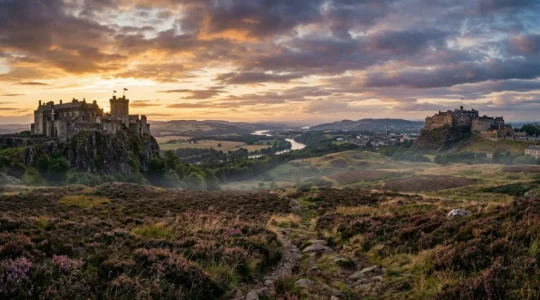
Stirling vs Edinburgh: Which Castle Has Better Military History?
While Edinburgh boasts superior natural defenses, Stirling is the more compelling military machine due to its pivotal strategic location and richer, more diverse siege history. Edinburgh Castle’s strength is its near-impregnable volcanic rock, a masterclass in passive, geographical defense. Stirling…
Read more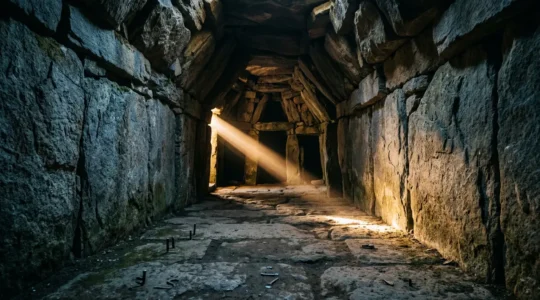
Maeshowe or Newgrange: How Does the Orkney Site Compare?
Deciding between Maeshowe and Newgrange isn’t about which is ‘better,’ but about understanding their profound differences in preservation, landscape, and our modern interaction with them. Maeshowe’s value lies in its context within Orkney’s vast, interconnected Neolithic landscape, which requires a…
Read more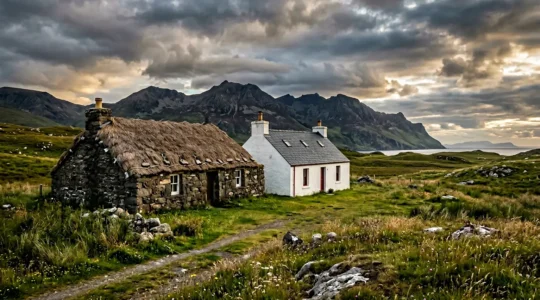
From Blackhouse to Tenement: A Journey Through Scotland’s Architectural Soul
The evolution of Scottish housing is a direct, functional response to profound social and economic pressures, not a simple progression of architectural styles. Design choices that seem decorative or primitive, like ornate tenement tiles or chimneyless blackhouses, were driven by…
Read more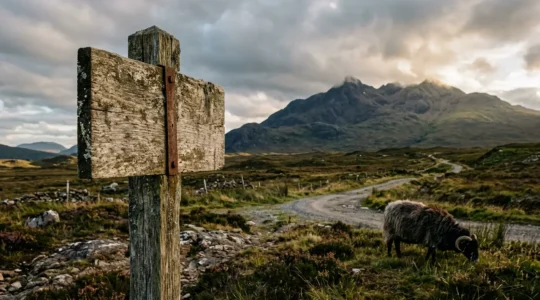
How to Pronounce Place Names on the Isle of Skye?
The biggest mistake visitors to Skye make isn’t mispronouncing Gaelic place names; it’s being too afraid to try. Each Gaelic name tells a story about the landscape, turning every signpost into a piece of history. Learning just a few key…
Read more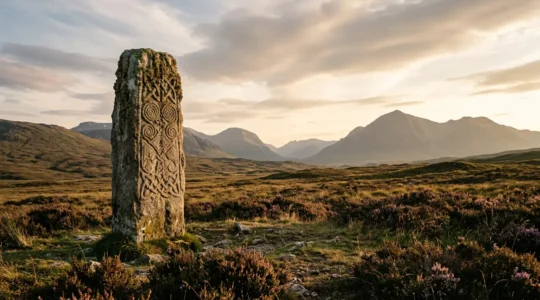
Celtic Knots: What Do the Symbols Actually Mean?
Celtic knots are far more than pretty patterns; they are a visual language expressing the profound interconnectedness that defines Scottish culture. Their endless lines symbolize continuity, linking the ancient past to living traditions. Each interwoven strand reflects the fabric of…
Read more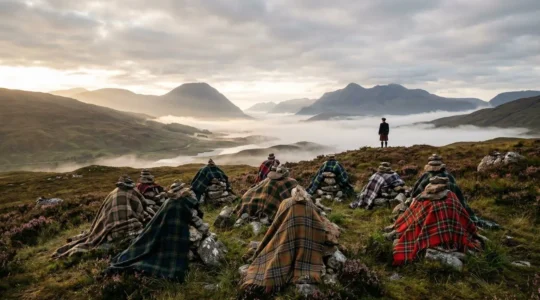
Can You Wear a Tartan That Isn’t Your Family’s?
Contrary to the widespread fear of causing offence, the question is not whether you have ‘permission’ to wear a tartan, but how to do so with respect and understanding. The rigid ‘one clan, one tartan’ rule is largely a Victorian…
Read more
Braveheart vs Reality: How to Learn the True History of William Wallace?
Braveheart gets one thing right: William Wallace’s story is epic. The film, however, is almost entirely fiction, and the real history is far more fascinating. The truth isn’t in simple fact-checking lists, but in the tangible evidence found across Scotland’s…
Read more
How to Host a Burns Supper at Home Without It Feeling Staged?
The secret to a successful Burns Supper at home is focusing on atmospheric authenticity, not rigid imitation. Prioritize the comfort of your guests and your own poise over slavish adherence to formal scripts. Adapt traditions by understanding their original intent:…
Read more
How to Trace Your Ancestors During a 7-Day Heritage Tour in Scotland?
A successful Scottish ancestry tour hinges on a crucial mindset shift: you are a family historian on a research trip, not simply a tourist. Genealogical research must dictate your itinerary, not the other way around. Tangible connections to your ancestor’s…
Read more